TIME TO RESTORE THE ELUSIVE BALANCE
By Zeba Sathar
2025-12-01
N recent years, a carefully crafted national narrative on population has emerged in Pal(istan. Grounded in the Islamic principle of `tawazun`, or balance, and centred on the rights of women and children. This narrative calls for families and the state to playtheir role in balancing responsibilities with resources. Widely endorsed at the highest levels, including from the Council of Islamic Ideology (CII), this framework emphasises the human rights of couples to have the means to decide their family size while seeking a balance between resources and population numbers.
However, despite growing recognition of the challenges posed by rapid population growth within religious and political circles, public discourse and action in this direction remain largely absent.
Meanwhile, the 2023 Population and Housing Census unexpectedly counted Pal(istan`s population at 241 million. This count not only superseded the anticipated numbers by about 10 million additional Pal(istanis, but also presented a shocking rise in the inter-censal average annual growth rate from 2.4 per cent for the period 1998-2017 to 2.55pc for the fiveyear period from 2017 to 2023. While the results of the latest census require full evaluation for internal consistency, they confirm a widely held view that population growth is far from waning. In fact, Pakistan is now considered an outlier in South Asia: compared to an average of two children per woman in the rest of the region, our total fertility rate was 3.6 births per woman in 2018, and, likewise, at above 2pc, our population growth rate is double the average rate in the region.
The critical question facing the nation today is: should these high growth rates and the exponential rise in population be of concern to us? For the last two decades, Pakistan has practically put its human development objectives on hold. Whatever development we can claim has been skewed away from investing in basic, quality education, primary healthcare or skill-building, leaving us in the midst of a human capital crisis. This thinking appears to be based on the premise that the human development agenda can wait until the economy is fixed. But even hard-core economists who shy away from the domain of human development must come to terms with the fact that pure economic reforms will not be enough to ensure growth and productivity. When countries like Vietnam, India and Thailand faced unprecedented lows in their economy, they were able to make a rebound. But they embarked on their recovery pathways with much better human capital, which became especially important at a later stage of their fertility transitions.
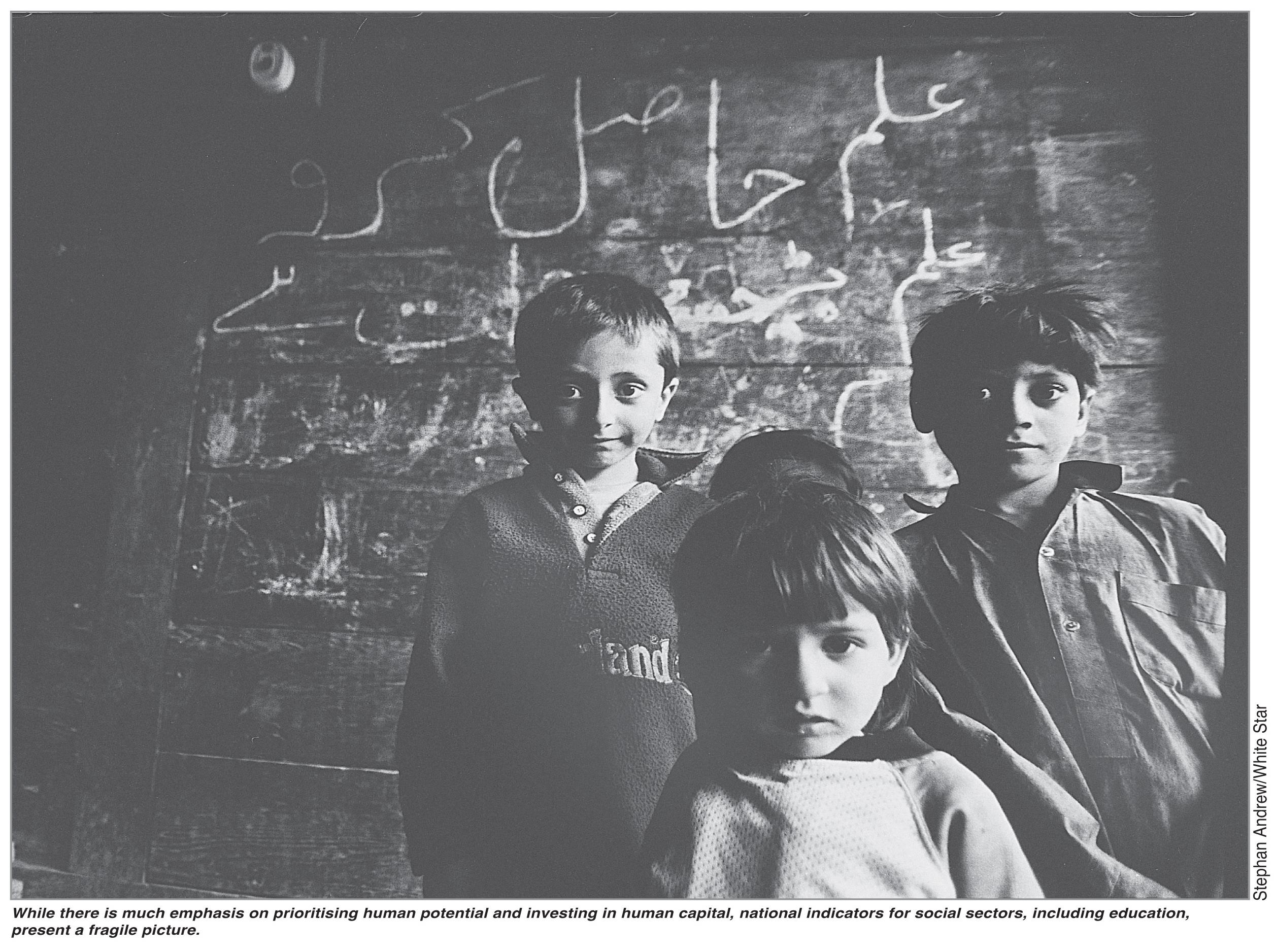
In comparison, where do we stand? While there is frequent emphasis on prioritising human potential and investing in human capital,ourindicatorsforeducation,workforce participation, employment and dependency present a fragile picture. Meanwhile, neglect of the human development agenda has also led to shamefully high maternal and infant mortality: nearly 11,000 mothers and about 360,000 babies lose their lives each year. Abortion rates are high, associated with millions of unwanted pregnancies.
Malnutrition is widespread and child stunting rates are alarming. Closely spaced and numerous children due to high fertility rates are an underlying correlation for all of these indicators. Pakistan also has an inexplicably high population of out-of-school children.
The current state of Pakistan`s human development indicators highlights the failures of the last two decades, which stem from the core contradiction of seeking economic growth while ignoring human development.
The `Pakistan@100` report of the World Banl( examined what it would take for more Pakistanis to become prosperous and for the country to graduate to a high-middle-income economy. This 2019 report highlighted the importance of fertility reduction in shaping crucial economic objectives. Sustained and high population growth poses a challenge to the task of ensuring inclusive social and economic development in the country. While not entirely responsible, the lack of attentionto population planning and resultant persistently high population growth rates have played a central part in the looming human capital crisis. Unless we correct course, Pakistan will face serious challenges in meeting its Sustainable Development Goals (SDGs) by 2030. Households living in poverty and in already underdeveloped regions are likely to slide back further.
In the late 19 s, Pakistan was poised to catch up with its neighbours in lowering the population growth rate. After a long period of high population growth, driven mainly by high fertility, Pakistan had begun to experience a decline in fertility during the period between 1988 and 2000. This era, marked by a return to democracy, saw population growth become a priority within the broader focus on social sectors under the Social Action Programme. Political commitment to reducing population growth rates as a development strategy was palpable, accompanied by progress in health, education and other social sector indicators.
Notably, the initial decline from a total fertility rate of more than six children per woman in the 1980s to 4.5 by 2003 occurred quite rapidly, raising high expectations for a continued downward trend. Pakistan witnessed the launch of community outreach initiatives, including the village-based Family Planning Workers scheme, followed by the larger Lady Health Workers Programme, officially known as the Prime Minister`s Programme for Family Planning and Primary Healthcare. Social marketing programmes, which are now more than 30 years old, also began during this period.
The Population Policy of 2002 aimed at achieving replacement level fertility by 2020 through the expedited completion of the demographic transition, entailing declines in both fertility and mortality rates. However, this policy became ineffective in 2010 due to the 18th Amendment to the Constitution, which led to the dissolution of the Ministry ofPopulation Welfare and the devolution of its functions to the provinces. Despite the return to democracy after the military coup in 1998, and three successive elected governments from 2007 to 2020, population concerns remain diluted at policy levels. The expectations of the 2002 Policy never materialised.
The most recent policy response was set in motion when the Supreme Court took suo motu notice of the alarming high population growth following the release of the 2017 Census results. A task force identified key pathways to reduce the population growth rate, and these recommendations were adopted by the Council of Common Interests (CCI) in 2018 and later incorporated into the National Action Plan on Population, which stipulated a decline in the fertility rate from 3.6 to 2.8 children per woman by 2025, and to 2.1 by 2030. Parallel decline in the population growth rate was envisaged, to 1.5pc per annum by 2025, and 1.2pc by 2030. Though ambitious, these goals seemed achievable, based on the rapid decline observed in the 1990s.
The 2023 census indicates we were again unable to effect the required shift. While all provinces and regions had set their respective targets to help achieve the CCI-stipulated national goals, there is widespread perception of weak implementation. To a large extent, the basics have not changed significantly.
The government has made stronger verbal commitments, and non-governmental organisations (NGOs), along with select international partners, are also providing assistance, but a clear commitment of funds is lacking. Provincial health departments continue to focus on improving maternal health and nutrition while neglecting family planning services.
A ray of hope hes m the strong evidence that Pakistani men and women want fewer children than they are having. By expanding and providing quality family planning services to this substantial portion of the population, population growth can be slowed. Well-planned and consistent demand generation will helpbuild on this momentum.
However, the wider political economy frameworl( must be aligned with population goals. Currently, the National Finance Commission (NFC) award, which assigns 82pc weightage to population size, serves as a major disincentive for provinces to fully implement programmes aimed at reducing population growth and fertility rates. Similarly, with a parliamentary democracy that ties political representation to constituency population numbers for both national and provincial assembly seats, there is a significant incentive to exaggerate and even encourage population growth.
We cannot continue to underestimate and overlook the profound, often-reciprocal, connections between demographic behaviours and trends in sectors such as nutrition, health and education, and wider societal and economic dynamics. Under the National Security Policy 2022, human development has entered the agenda of security think tanks, where the high number of births and burgeoning population of youth seeking work every year are recognised as a `non-traditional threat` for the state`s economy, viability and security. With the right human development investments, this threat could be converted into human capital.
The current economic crisis is stifling public investment, leaving the social sectors severely under-resourced. At the same time, the huge scale of climate change impacts in Pakistan is corroding the population`s coping capacities, increasing vulnerability and pulling even more resources away from human development. In this context of urgency and overstretch, it is crucial to remember that lowering population growth is not just another need to be catered to it may well be the key to reducing the pressure and bringing our population and resources in balance. At the Population Summit 2025, stalceholders will have the opportunity to decide: do we take the bold steps forward to restore tawazun? Or, do we continue to slide back? The writer is Country Director; Population Council