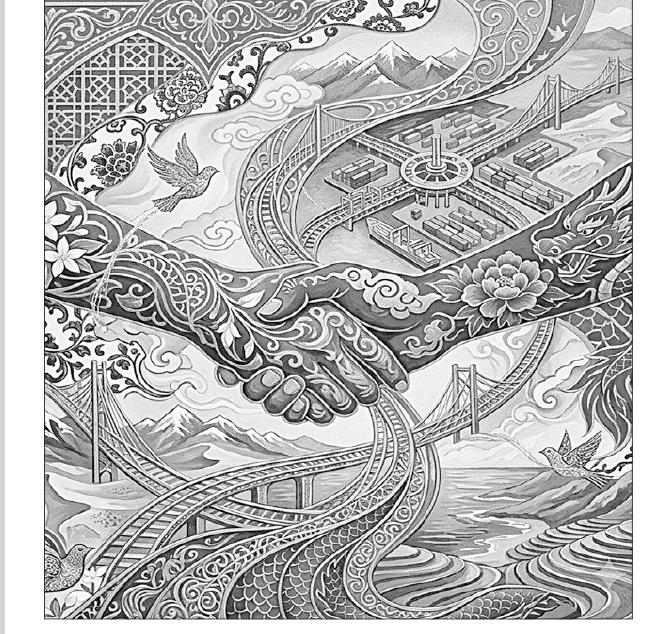
Next stage of China ties will be crucial
2026-08-07
FOR decades, the relationship between Pakistan and China has been recognised as one of the most enduring partnerships in international relations. Today, the world is witnessing a new era where economic strength, technological advancement and industrial capability define the progress of nations.
In this changing environment, Pal(istan has a historic opportunity to transform its economic potential into sustainable growth by strengthening cooperation with China under the framework of the China-Pal(istan Economic Corridor (CPEC) and the Belt and Road Initiative (BRI).
China`s remarl(able transformation from a developing economy into one of the world`s leading industrial and technological powers provides valuable lessons for countries seeking economic development. One of the most important factors behind China`s success is the effectiveness of its government administration and development model.
Chinese institutions have maintained a long-term vision focused on economic growth, industrial modernisation and improving competitiveness in global marl(ets. The coordination between government departments, local administrations, businesses as well as research institutions has created an environment where industries can grow and compete internationally.
Pakistan has a strategic geographical location,ayoung population, talented professionals and access to important regional marl(ets. However, to fully benefit from these advantages, Pal(istan must continue moving from a consumptionbased economy towards a production and export-oriented one. The future of CPEC should focus not only on infrastructure, but also on industrial cooperation, technology transfer, investment partnerships and joint ventures.
Pakistan`s leadership and institutions have an important responsibility in termsof creating due conditions that support economic progress. A stable Pakistan is essential not only for its own development, but alsofor regionalconnectivity and investment. Our economic progress and national security are closely linked, and both are necessary for achieving long-term prosperity.
Pal(istan can learn from the Chinese experience byfocusing on technical education, skilled worl(force development and encouraging innovation. The country`s greatestassetisits people,andinvesting in human capital will determine its future competitiveness. For Pakistan, BRI provides an opportunity to connect with global markets and become an important economic bridge linking China, Central Asia, the Middle East and beyond.
The bilateral relationship has always been based on friendship, but the next chapter ofthis partnership should be defined by economic cooperation and shared development. Both countries can work together to create opportunities for businesses,entrepreneurs,investors and young professionals.
Pal(istan surely has the capability to achieve remarkable progress as it does not lack potential; what it needs is consistent implementation of policies, stronger industrial planning and greater focus on exports and innovation.
The journey of economic transformation requires a national vision that continues beyond political cycles. China`s development experience proves that long-term planning, effective administration and commitment to industrial growth can change the nation`s destiny.
The future of Pakistan-China relations isfullof rich possibilities.Ifboth the countries continue worl(ing together with a shared vision, CPEC and the BRI can actually become powerful platforms for real economic transformation, regional connectivity and mutual prosperity.
The world is moving towards greater economic competition, and nations that produce, innovate and invest in knowledge will lead the future. Pal(istan has an opportunity, and it is the responsibility of the stakeholders, both civil and military, to transform this opportunity into reality.
Syed Jawad Ali Shah Zhejiang, China