Huge contradictions mar climate policies
2026-02-09
THIS is with reference to the letter `A flawed solution` (Feb 1) about trees being chopped down in Islamabad in the name of development. Ranked among the most vulnerable countries to climate change, Pakistan`s urban population stands at the forefront of the crisis, with very little being done. For Islamabad, in particular, climate change is not a really distant threat anymore; it is very much a present reality.
Summers are hotter, heatwaves last longer, and rainfall is more intense and less predictable. In this reality, urban trees are not ornamental features; they form an integral part of the city`s basic climate defence system.
The loss of mature trees is never trivial, particularly in an urban biodiversity enclave, such as the Shakarparian forest, which forms the core habitat for almost 200 species of animals and plants. While the government has stated that the loss would be offset through a ten-to-one tree replanting ratio, it fails to understand that planting new saplings, even at scale, does not replace what is lost in any meaningful timeframe.
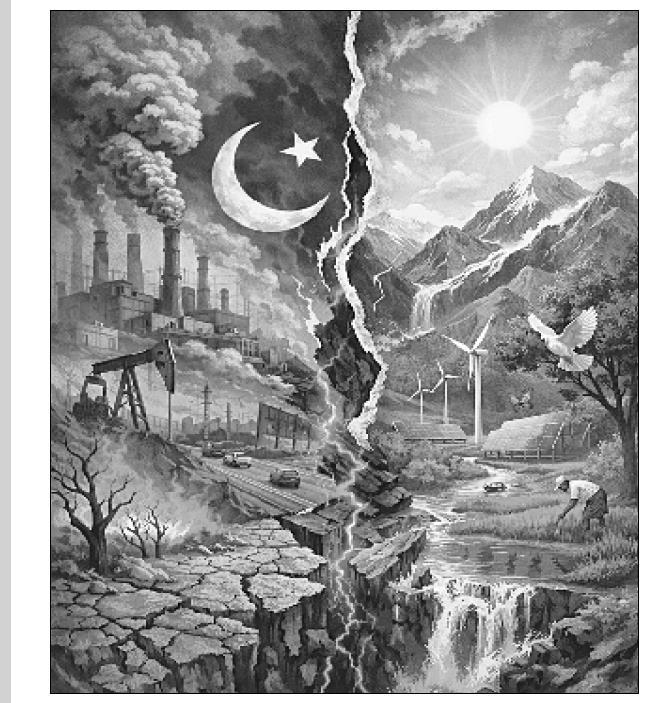
This exercise presents a serious contradiction with Pakistan`s climate messaging.
Very recently, at the global conference in Brazil, Pakistan presented itself as climate-vulnerable, but climate-responsible.
There was much talk about nature-based solutions, ecosystem restoration, and the promise of generating billions of dollars through carbon markets.
These conversations and commitments are clearly not backed by intentions and actions, and yet we wonder why the world is not paying attention to our climate finance needs worth billions of dollars.
Globally, carbon markets and climate finance frameworks rely on credibility, trust and integrity. It took Brazil more than 15 years of conservation-led confidencebuilding to finally operationalise its carbonmarkets. In our case, cutting down mature urban forests to facilitate infrastructure development, under public management directly undermines that logic. Having a rationale for that makes it even worse.
As a Pakistani conservation professional working in the international space, it only becomes hard to argue for high-integrity carbon strategies while eroding some of the most accessible and visible carbon and biodiversity assets we have.
Environmental conservation is surely not against urban growth. Infrastructure is essential for development and fulfilling the economic and mobility needs. However, climate-smart sustainable development must be grounded in evidence-based decision-making and the application of internationally recognised frameworks, such as the Mitigation Hierarchy. This approach prioritises the avoidance of unnecessary environmental loss, followed by the minimisation and mitigation of impacts, the restoration of affected ecosystems, and, only as a last resort, the use of offsets. Urban forests should be treated as assets to be strengthened, not obstacles to be cleared.
With a strong resolve and an informed citizenry, Pakistan must strive to protect its remaining urban forests by being transparent about decisions, and giving due attention to evidence and data. This would not only send a powerful signal that Pakistan`s climate commitments are more than hollow words, but also ease its access to global climate finance.
Credibility on climate, at the end of the day, is not built in conference halls, but in the everyday decisions we make about land and the kind of cities we choose to live in.
Hamza Butt Cambridge, UK