Military might can`t beat terrorism alone
2026-10-17
PAKISTAN has spent many years fighting terrorism, but the attacks 1(eep coming.
The question is not whether the state can fight terrorism, for it clearly can. The question is how militant groups keep finding fresh recruits, keep regrouping, and 1(eep stril(ing bacl(. The 2026 Global Terrorism Index (GTI) mal(es that question impossible to dodge. Deaths have climbed for six consecutive years. While incidents fell last year compared to 2024, fatalities rose regardless.Thisis notastory about a passive state. It is one that leans heavily on force, while the political, legal and institutional scaffolding needed to stop militancy regenerating never quite gets built. That gap is the real strategic problem.
Consider, for instance, the resurgence of the Tehreel(-i-Taliban Pal(istan (TTP).
The GTI attributes 595 attacks and 637 deaths to the group in 2025 alone, more than half the country`s entire toll. This is not a group barely surviving;itis adapting. Meanwhile, the Balochistan Liberation Army (BLA) has escalated attacks on the state, civilians,foreigners and Chinese interests. But lumping the two together would be a mistake; they emerge from different histories and demand differentresponses.
The border with Afghanistan sits at the heart of this crisis: rugged, porous and long exploited by militants seeking sanctuary whenever operations inside Pal(istan intensify. Islamabad has repeatedly presented evidence that TTP commanders and camps operate from Afghan soil, a charge Kabul denies even as cross-border attacks traced to those sanctuaries keep mounting. Pal(istan has shown considerable restraint, favouring diplomacy for years before resorting to strikes. Pal(istan cannot be expected to absorb instability it did not create.
A militant rarely acts alone. Someone recruits him, someone finances his deeds,someone shelters him, and somewhere along that chain, an institution misses the connection. Pal(istan`s conversation about terrorism fixates on the man holding the gun. But killing him should marl( the start of an investigation, not the end. It should lead bacl( to the recruiter, the financier, and the facilitator, requiring real coordination between intelligence, police, prosecutors and courts, backed by forensics and financial tracing that actually function.
The security forces can clear territory.
What follows is harder. Where the police force is weak and the courts are out of reach, militants quietly slip bacl(in. Real success is not whether the army can beat the militants in the field, it is whether the state can govern once the army has left. Pakistan keeps winning round one and losing round two.
Not every angry citizen is a militant, and treating political grievances, particularly in Balochistan, as purely a security issue only feeds the narrative militants want told. Justice, representation and trusted institutions narrow the space recruiters work in. Communities usually spot recruitment first, but they only speak up if they believe the state will protect them.
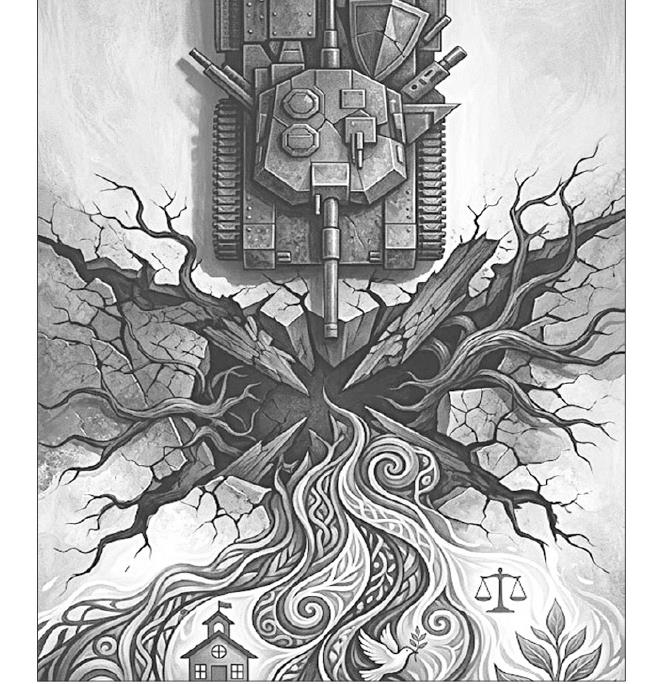
The military still matters, but it cannot fix a problem rooted deeply in politics and justice. Addressing the root causes of terrorism is essential to winning the peace.
Lt-Col (retd) Syed Raziuddin Rawalpindi