Looking towards EVs
2026-05-18
BYD`s showroom at Metropole has constant, if sparse, traffic in the background as Danish Khaliq, spokesperson and Vice President of Sales & Strategy for BYD Pakistan, talks about the EV giant`s plans in Pakistan. Despite the modest Rs5-per-litre cut in petrol prices over the weekend, fuel remains prohibitively expensive and more consumers are turning towards electric vehicles. Showroom walk-ins have quadrupled, he says, translating directly into higher sales conversions. The company`s $150m investment in its Gharo plant aims to achieve around 20pc localisation over the next two to three years.
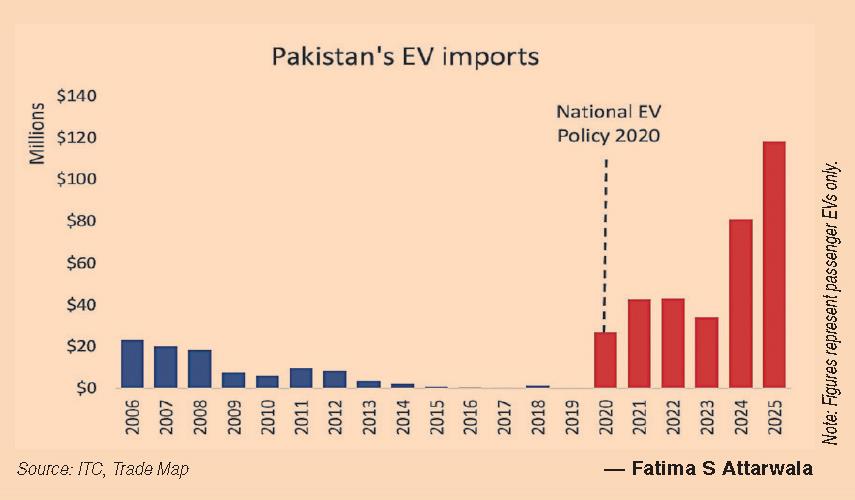
Pakistan`s passenger EV imports have surged 338pc since the government`s National Electric Vehicle Policy in 2020, rising from just $45,000 in 2019 to $118.4 million in 2025. But the real driver of demand is the cost of commuting.
Back-of-the-envelope calculations suggest that filling up a petrol vehicle for 400km can cost around Rs16,000 at current prices, compared to about Rs3,000-3,500 to fully charge BYD`s ATTO 3. With fewer moving parts andlower servicing requirements, maintenance costs can also fall by nearly twothirds, Mr Khaliq claims.
It is likely that for the grandchildren of today`s younger generations, traditional cars will belong in museums. But given the mixed success of localisation in Pakistan`s conventional auto sector, the question remains whether the country is replacing one import-dependent industry with another.
Developing a strong EV market for cars is challenging because domestic demand is limited, as underlined by the Pakistan Business Council`s 2023 report `Electric Vehicles: Make in Pakistan Perspective`. It only becomesfeasible if Pakistan taps into the global market, if not through complete cars, then through car parts.
Calling EVs a double-edged sword, the report highlights that the raw materials required have monopolistic and weak supply chains. Lithium, nickel, and rare earths are used in batteries and motors. Batteries have a limited lifespan and will eventually dominate import bills to sustain new production and maintain older fleets, the report states.
Without regulatory oversight and implementation, historically not the country`s strongest features, Pakistan may face a future where the current account deficit is due to lithium, instead of oil.