Asia-Pacific merits ILO leadership slot
2026-10-31
IN its 107-year history, the International Labour Organisation (ILO) has never had a director-general (DG) from the entire Asia-Pacific region. This is despite the fact that the region represents 60 per cent of the global worl(force, and remains a point of significant geopolitical and institutional debate. Till date, just four officials from the entire Asia-Pacific region have ever been proposed for the top leadership post, though none of them received the required support to be elected.
While critics and regional advocates frequently point to structural inequality and protectionism, institutional analysts and diplomatic historians attribute the historical leadership patterns to a combination of geopolitical dynamics, voting structures and many regional coordination challenges.
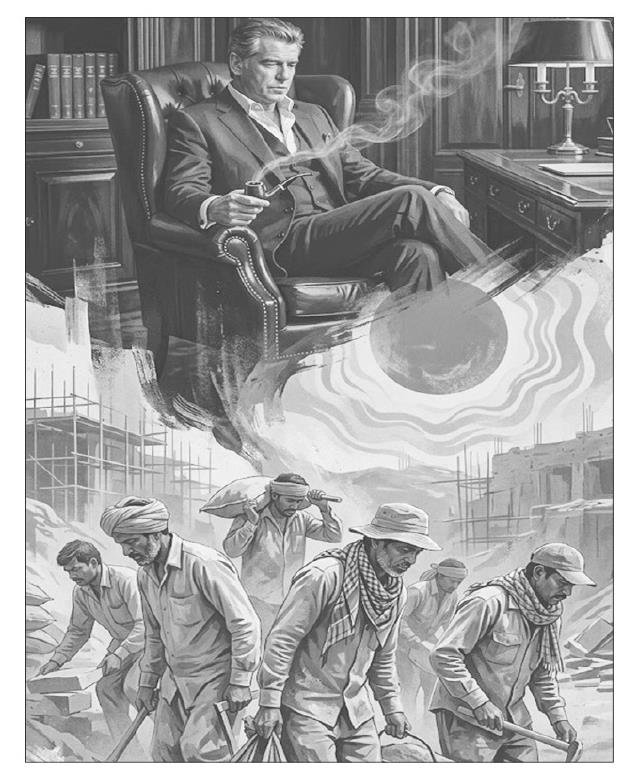
The arguments surrounding the leadership deficit typically split into two main perspectives. Advocates for regional representation argue that systemic barriers and geopolitical dominance have historically concentrated leadership, reflecting a deeply entrenched post-World War II globalgovernance architecture.
Institutionalinertia sinceitsfounding in 1919 has led the ILO to have primarily been led by DGs from Europe and the Americas. There was just one DG from Latin America and the Caribbean the first from the southern hemisphere in 1999, while the first African to hold the title is the incumbent who was elected in 2022 to a five-year term.
Critics argue that Western industrialised nations and long-standing powerful business and worl(er lobbies have historically leveraged their diplomatic weight to maintain institutional control, preserving policies that align with advanced economies rather than developing markets.Proponents of the ILO leader hailing from the Asia-Pacific argue that without representation atthe very top,global labour policies may fail to adequately address the unique realities of the region, such as its massive informal economy, rapid digital transformation, and the specific needs of its diverse worl(force.
Conversely, international relations experts and ILO analysts often point to institutional dynamics, internal mechanics and regional bloc coordination of the organisation to explain the outcome of elections. The ILO operates on a unique tripartite system where governments, employers and workers have voting rights.
To win, a candidate must secure a majority across these diverse, cross-border interest groups. Success depends heavily on building consensus outside of purely geographicalalliances.
The Asia-Pacific is arguably the most economically, politically and socially diverse region in the world. It spans highly industrialised economies, rapidly growing emerging marl(ets, and small island developing states. Because of this massive diversity, the vast region has historically struggled to effectively unite behind a single, consensus candidate during election cycles, which splits its voting power compared to more unified regional blocs.
As global economic gravity continues to shift towards the Asia-Pacific, calls for the ILO to reflect this reality in its top leadership have intensified. For a candidate from the Asia-Pacific region to successfully secure the DG`s post in a future election, regional diplomatic mechanisms would lil(ely need to achieve early, unified bacl(ing for a single nominee capable of building effective cross-constituency alliances among member-states as well as global worl(er and employer federations.
Winston R. Dudley Ex-Regional Deputy Director for AsiaPacific, ILO Bangl(ok, Thailand