
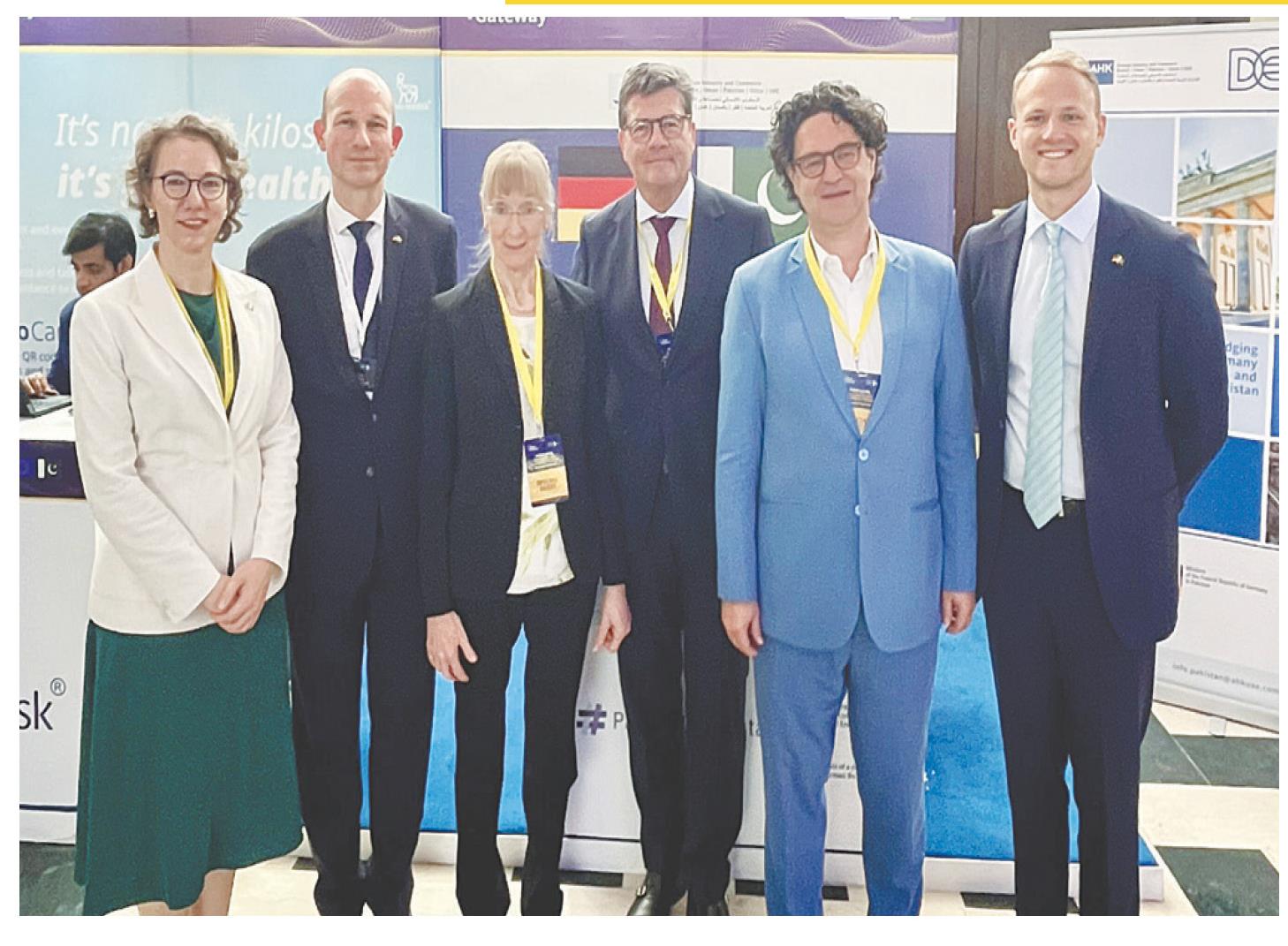
October 2026 brings two anniversaries into the same month. Germany marks the 36th Day of German Unity. Germany and Pakistan mark 75 years of diplomatic relations, established on 15 October 1951. Anniversaries invite reflection. They also invite a harder question. What have seventy five years of partnership actually built in commercial terms, and what would it take to build more.
Pakistan has been increasingly visible on the international stage in the last nine months. That visibility has changed how the country is discussed in capitals and in boardrooms. It has not yet changed the underlying commercial picture by much. Attention is not the same as investment. Investors do not commit capital because a country is in the news. They commit because the rules are clear, the numbers hold over a five year horizon, and the cost of getting a product certified, shipped and paid for is predictable. Converting international attention intoindustrial partnership is slow, unglamorous work.
The trade figures show where the relationship stands.
German federal statistics recorded imports from Pakistan of 2.87 billion euros in 2025, an increase of 13.4 percent on the previous year. Germany absorbed 5.5 percent of Pakistan’s total goods exports that year, ahead of Spain and the Netherlands. Germany is Pakistan’s largest single market in the European Union and its fifth largest worldwide.
The most recent picture is flatter. State Bank of Pakistan figures show exports to Germany down by almost three percent in the nine months to March 2026, and exports to Europe as a whole essentially unchanged across the fiscal year that closed in June. The two statistical systems are not directly comparable. German figures record goods entering Germany, including consignments routed through other European ports, so the levels differ substantially from Pakistan’s own export data. The direction of travel is what matters here. The base is solid. The momentum has softened.
That softening has causes worth naming. Regional conflict has raised freight and energy costs across the board. European consumer demand has been weak.
Competition in textiles from producers with expanded market access has intensified. None of these is unique to Pakistan, and none of them is permanent.
Composition is the deeper question. Textiles and apparel account for 86 percent of what Germany buys from Pakistan. Pakistani producers in that sector are internationally competitive and highly valued by German buyers, and the sector supports employment on a scale no other export industry matches. But an export base concentrated in one sector is an export base exposed to one set of shocks, and this year has demonstrated exactly that. Therefore, diversification is key. Information technology and digital services, agricultural products, sports goods, surgical instruments, pharmaceuticals, and minerals and mining are all areas where Pakistani capability already exists and European demand is real.
In the other direction, German exports to Pakistan stood at 840 million euros in 2025, roughly level with the previous year. Chemicals and machinery together make up half of that figure. This is the less visible half of the relationship and the more consequential one for Pakistan’s industrial future. German machinery is what allows a Pakistani factory to move up the value chain, meet European standards and produce goods it could not produce before. Every machine tool bought is a precondition for the next export.
April 2026 marked a genuine step forward. The first High Level European Union and Pakistan Business Forum convened in Islamabad on 28 and 29 April, bringing together around one thousand policymakers, business leaders, investors and financial institutions. Sessions addressed agribusiness, digital innovation, green logistics, sustainable textiles and responsible mining.
Financing instruments under the Global Gateway initiative were presented alongside the European Investment Bank and European development finance institutions.
What made the Forum significant was not its size. It was the number of European and Pakistani companies in the room at the same time, talking to each other rather than about each other. Trade policy is written by governments, but trade is done by firms. A European machinery supplier and a Pakistani manufacturer who meet across a table and discover a specification they can both work with have achieved something no communiqué can produce. That is where commercial relationships actually begin, and Islamabad in April produced a great many such conversations. The measure of the Forum will be how many of them turned into contracts.
Germany has the largest single stake in that agenda.
As Pakistan’s leading European market, Germanycarries the largest share of the trade at issue. European instruments matter here too. Around 90 percent of Pakistan’s exports to the European Union move under GSP Plus preferences, worth roughly 732 million euros in tariff relief in 2024, the most recent year published. The scheme moves to a revised framework in 2027, under which beneficiaries reapply rather than roll over automatically.
That is not a technicality, and it is not solely a matter for governments. Pakistani exporters know precisely what preferential access is worth, because they see it in their costing sheets. In our exchanges with business associations and chambers here, the 2027 framework already comes up. It should. The reapplication is a commercial question before it is a diplomatic one, and the companies whose order books depend on it have a legitimate voice in how their country prepares.
Our own data suggests German companies in Pakistan are steady. In our Spring 2026 AHK World Business Outlook,46 percent described their current business situation as good and a further 46 percent as satisfactory, despite instability in the wider region. Thirty five percent plan to increase local investment over the next 12 months.
Fifty eight percent have no intention of relocating operations. At the same time, 84 percent named energy costs as a principal risk, and a large majority reported supply chain disruption arising from regional instability.
That is the honest picture. Companies are committed while they are watchful.
The path from here is not mysterious. Pakistan’s New Tariff Policy, which aims to bring average import duties from above 20 percent towards 10 percent, is exactly the kind of measure that changes commercial calculations, provided it is carried through. The same applies to predictability in taxation, to the repatriation of profits, and to internationally recognised certification. Reform is cumulative. Each measure that holds makes the next investment decision easier.
At AHK, our role is to make that conversion happen case by case. We bring German delegations to Pakistan, take Pakistani capability to German trade fairs and industry associations, and connect companies that would otherwise never have met. Seventy five years of bilateral relations have given us a solid foundation. Our task, on this Unity Day, is to build on it.