
On this year’s German Unity Day, we celebrate not only Germany’s reunification, but also 65 years of German-Pakistan development cooperation. In 1961, Pakistan became one of the first countries with which Germany established a development partnership in the very same year that Germany’s Federal Ministry for Economic Cooperation and Development (BMZ) was founded. Over sixty-five years, the partnership has grown into one of German’s longest-standing development relationships.
The partnership evolves as Pakistan’s challenges and opportunities change. Some of the key questions, however, have remained the same. How can Pakistan build an economy and society that create opportunities for its growing population? How can the country, at the same time, become more resilient to economic and climaterelated shocks? To address these ongoing development concerns, German Development Cooperation has focused on three closely intertwined areas: climate and energy; skills and private-sector development; and adaptive social protection. In addition, the German Cooperation has invested significantly in the Governance and Health sectors towards improved public service delivery and institutional capacity in Pakistan. In 2025, Germany committed EUR 114 million over a period of two years (2025-2027).Energy and climate: investing in resilience Germany has supported Pakistan’s energy sector for decades. Today, sectoral challenges differ from those prevalent ten years ago. Pakistan has enormous renewableenergy potential. To realize this, Germany has invested in more than 12,000 MW of power generation capacity.
Adding generation capacity alone will not solve the energy sector problems. Reliable electricity transmission networks and grids, integrated energy planning, energy efficiency and a regulatory framework meeting today’s requirements have become equally critical. Our cooperation is evolving accordingly: towards an electricity system capable of integrating more renewable energy for providing reliable, clean, and affordable electricity for household and business consumers.
Hardly any country illustrates the urgency for climate action both mitigation and adaptation as starkly as Pakistan. Repeat disasters, including the devastating floods of 2022, manifest the impact that climate change can have on human lives, livelihoods, infrastructure, public finances, and sustainable development.
Germany has been a long-standing partner in strengthening Pakistan’s climate resilience. Under the Pakistan-German Climate and Energy Partnership, Germany supports stronger climate-risk management and climate-resilient infrastructure as well as policy frameworks. Adaptation also means acting before disasters strike.
This preemptive action pivots on understanding risks, mainstreaming mitigation measures into planning and investment decisions, protecting natural resources, and strengthening institutions and communities so that climate shocks do not undo years of development.
Protecting development gains A household can spend years improving its living conditions. This can be reversed in the wake of disasters. Sudden onset disasters such as floods can roll back marginal development or wellbeing gains that take a household generations to achieve.
Germany has been Pakistan’s long-standing partner in strengthening social protection systems. In Khyber Pakhtunkhwa province and Gilgit-Baltistan region, Germany has pioneered health insurance initiatives.
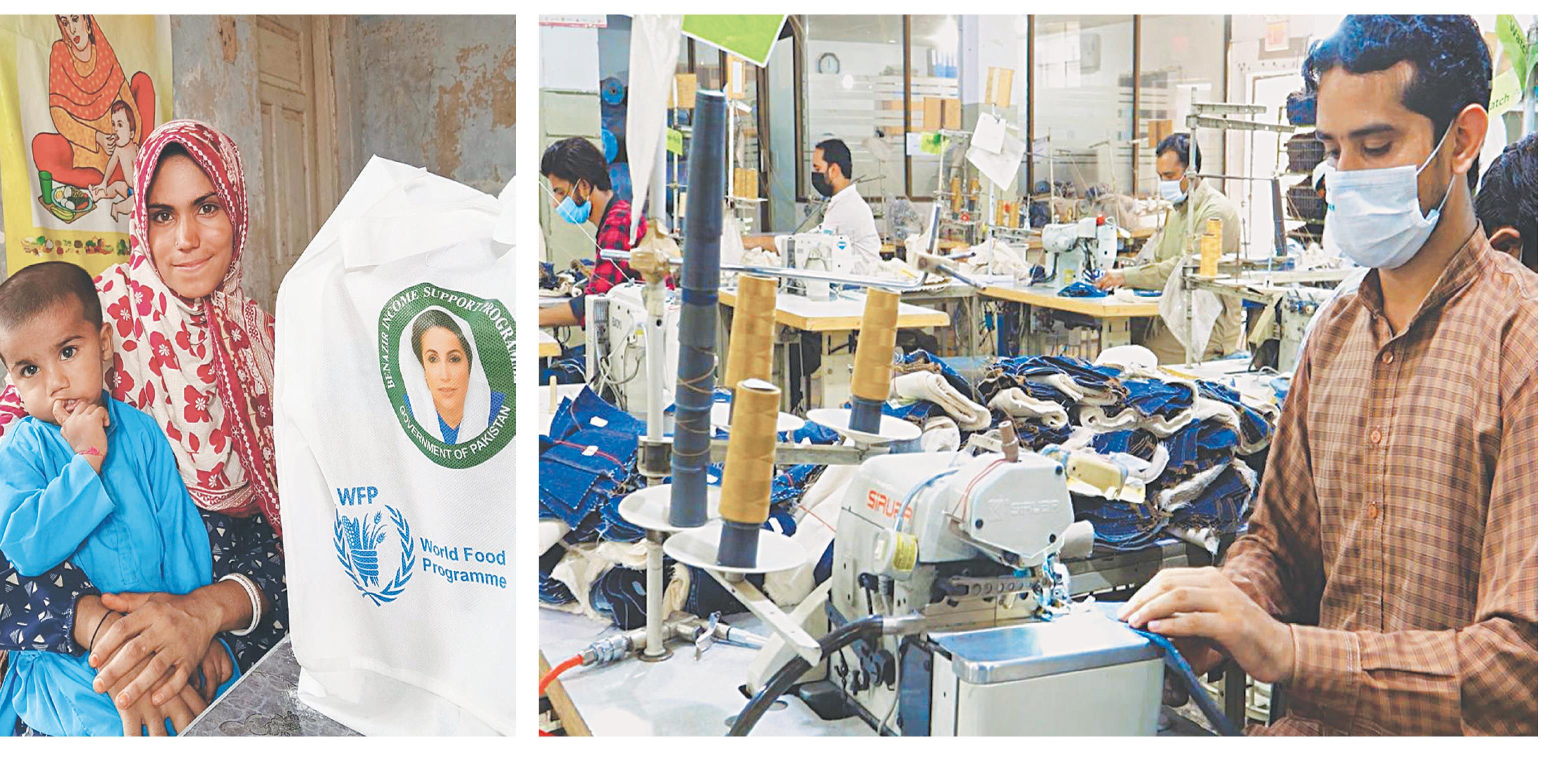
Following the 2022 flood, Germany has extended cash assistance through the Benazir Income Support Programme (BISP), benefiting more 5.8 million floodaffected women and children (by and large, calamity-hit households). Germany has also strengthened BISP’s system through which more than 10 million womenheaded households can have improved access social protection benefits.
The next step is adaptive social protection. By integrating social protection into climate adaptation and disaster-risk management, systems can identify vulnerability, act early, and scale up when shocks occur. Social protection should not stop at covering crises. Better links with skills development, employment and economic opportunities can help families broaden their longer-term prospects.
Skills, businesses and jobs Pakistan’s greatest economic potential lies in its people only if its harnessed well. With a large young population, creating productive employment and diversifying opportunities are country’s biggest challenges as well as its greatest assets.
One area of investment can be skills development that meet changing market demand and shape-shifting sectoral trends. German Development Cooperation has therefore supported Pakistan’s vocational training system for many years. Germany has collaborated with government and industry to make skill training more relevant to employers and improve employment prospects, especially for women. More than 28,000 young people have completed competency-based vocational training, while six Centres of Excellence have been established to strengthen the skills system.
Skills can only translate into well-paid jobs if businesses and industry invest, innovate and grow.
On this front, German Development Cooperation has expanded its engagement in developing and mobilizing the private sector in Pakistan.
For instance, Germany is helping Pakistani micro, small and medium-sized enterprises access finance, become more competitive and enter new markets.This is crucial considering financing limitations and policy constraints in Pakistan. About 500 start-ups and growth-oriented small entrepreneurs have been selected for business acceleration. About 200 companies have been extended tailored financing with an anticipated potential for creating 2,500 new jobs.
Germany also aspires to bringing development cooperation and German businesses closer. German companies offer technology, investment and expertise in many areas relevant to Pakistan’s development from renewable energy and energy efficiency to sustainable production and skills. This constellation of public sector investment and private sector initiative can amplify the sustainable development and economic growth impact in Pakistan.
Experience shows that long-term development cooperation between countries can also reinforce and deepen economic relations through confidence building, knowledge sharing and networking. Supporting Pakistan’s private sector and strengthening German-Pakistan economic relations are therefore not competing but complementary objectives.
Spanning six decades, the German-Pakistan development cooperation has accumulated considerable experience while touching many lives, reaching many households, and benefiting many individuals. The task at hand is using this extensive experience for building resilience the face of a rapidly changing environment. Looking ahead, German Development Cooperation remains Pakistan’s partner in resilience building, protecting development gains against shocks, creating jobs, enabling businesses, and mobilizing private capital for sustainable development.