
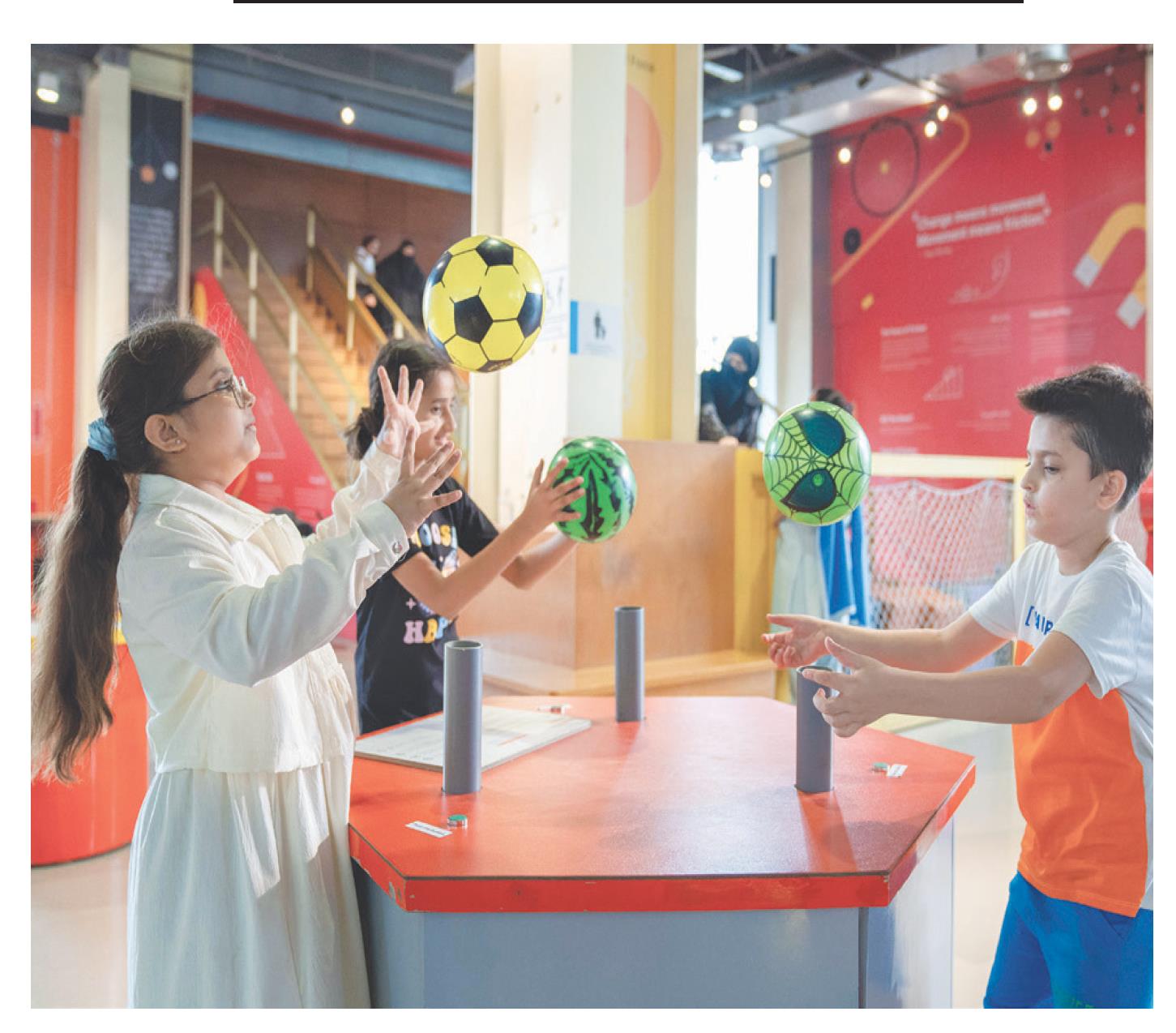
en-year-old Aysha at The Dawood T Foundation’s MagnifiScience Centre (MSC), one of the Foundation’s flagship projects, doesn’t read that air pressure increases with depth. She blocks the wind channel.
The ball rises. She tries again, adjusts, and within a couple of tries is steering it at will. The wobbles aren’t mistakes, they are the method: the difference between informal and formal learning, playing out six days a week on four floors in Karachi, in a purpose-built site among the remnants of a colonial warehouse at Karachi’s Railway Quarters.
Pakistan’s population is young, over 66% of it is under thirty, and the World Bank estimates the economy needs to generate 2.5 to 3 million new jobs a year just to keep pace. A 2025 study of 500 Pakistani graduates and 50 employers found that 72% of employers were dissatisfied with graduates’ work-readiness, citing gaps in practical experience, critical thinking and problem-solving rather than theoretical knowledge. This is precisely the muscle the graduate survey found missing, not more theory, but hours of low-stakes trial and error before the stakes are real. Formal technical and vocational training reaches only a small share of the country’s youth.
MSC is the country’s first interactive science centre: four floors, more than 400 hands-on exhibits, over 750,000 visitors since 2021. Each exhibit is built to let a ten-year-old touch a scientific principle and adjust it until it works. Outside, the Science Garden adds a bush maze, a treehouse, slides, swings, and a climbing wall, built for children to use their bodies as part of learning, not a break from it. The Government of Sindh formally listed MSC as a museum, the first time it has carried a public-education mandate of its own. In MSC’s earlydays, the exhibition model was also shaped by a German exhibit developer. The Foundation’s collaboration with the Goethe-Institut goes back further still.
Informal science learning has research behind it now, not just intuition. Museums are one of the primary ways the public meets STEM outside school: globally, only around 15% percent of science-centre visits are school groups, at MSC it is 47%, with many returning on their own time.
Karachi already knows what happens when an idea reaches people only through institutions. When two Sindhi-language books on evolution launched at the Arts Council last year, a university dean recalled Darwin going into the Sindh curriculum, then coming back out after public pressure. The books existed because one doctor had translated the ideas into language ordinary students could read. It’s the same patient, practical translation MSC does every day, turning abstract science into something a child’s hands can test.
The museum listing gives MSC a mandate to be exactly what it’s already becoming: expanding the Science Garden’s role in early learning, turning single school trips into returning relationships, and training facilitators to read what a child is stuck on. It compounds an effect already visible in the footfall since 2021. The real work an exhibit does isn’t teaching a fact a teenager will forget by next term, it’s the ten minutes she spends failing to light a circuit the same problem-solving employers say Pakistan’s graduates arrive without, rehearsed here for free, years before a CV ever asks for it.
A generation that has already learned to fail at a circuit and try again is a generation better prepared for a job market that will keep changing under it.