
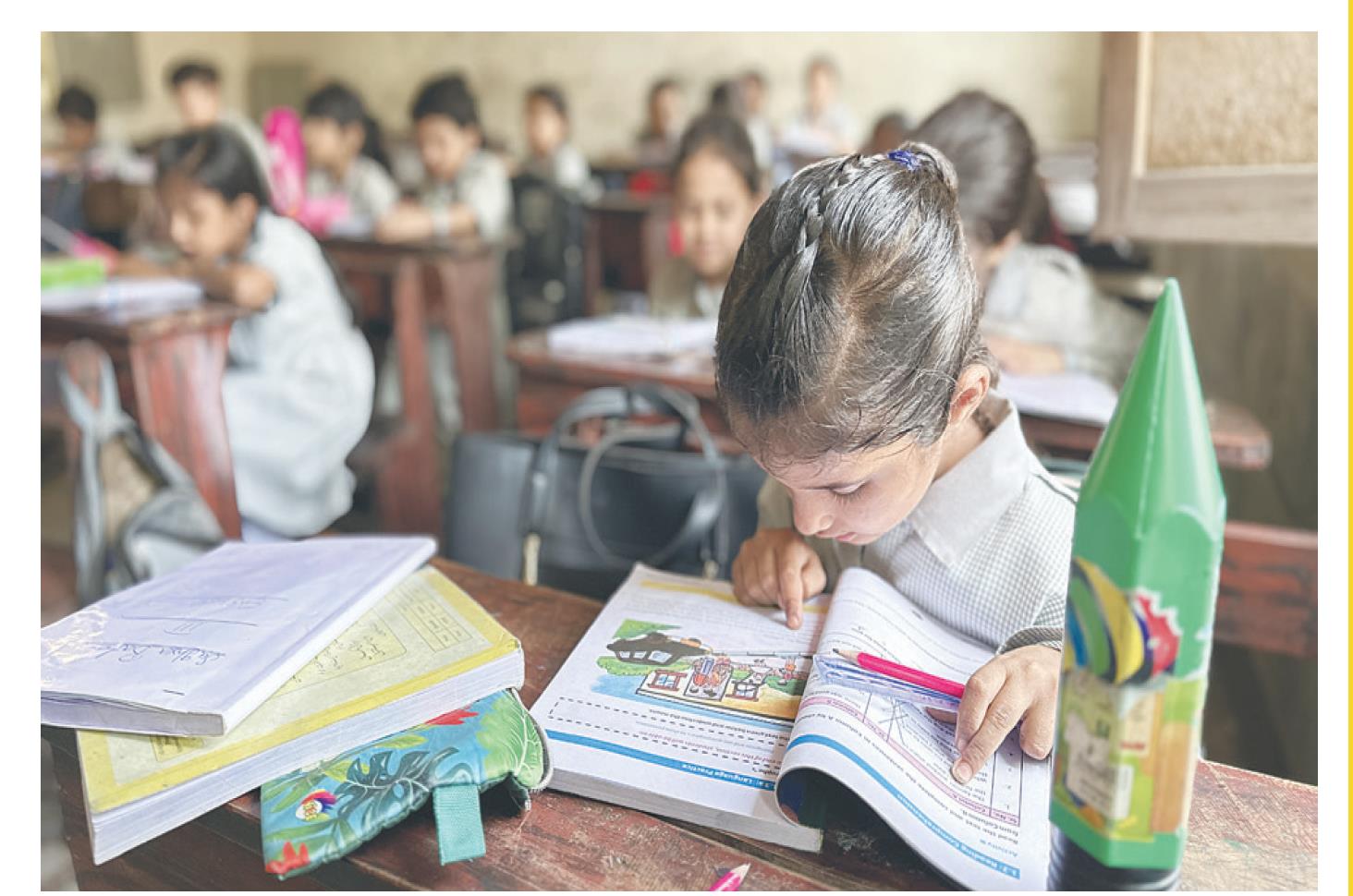
Clear vision can make a profound difference to a child’s C education. Yet for many children in Karachi’s lowincome communities, eye disorders remain undetected and treatment is out of reach. A partnership between the Pakistan Eye Bank Society (PEBS) and Rotary Club of Heidelberg-Schloss, Germany,is helping to close this gap-and is now doubling its annual screening target to 120,000 students.
The School Eye Clinic Project screened 64,554 students in its first phase, exceeding its original target of 60,000 ahead of schedule.
Of those screened,15,753-nearly one in four were identified with refractive errors, highlighting the considerable need for accessible eye care. Building on these results, the partners have extended the project for a second phase, running from August 2026 to July 2027, with the aim of reaching 120,000 schoolchildren.
A partnership with a practical purpose The initiative began in 2025, when Rotary Club of Heidelberg-Schloss partnered with PEBS to improve access to eye care for schoolchildren in underserved areas of Karachi. Combining the Rotary club’s financial support with PEBS’s clinical expertise and community experience, the project brings screening directly into schools and connects children with follow-up care.
The partnership was formalized through a Memorandum of Understanding signed in Heidelberg on 7 May 2025 by Dr. Tilman Krauch, then President of Rotary Club of Heidelberg-Schloss, and Qazi Sajid Ali, President of PEBS. The project was launched in Karachi on 27 May 2025 in the presence of Dr. Rüdiger Lotz, then Consul General of Germany. A ceremony marking the completion of its first phase was held on 16 July 2026, attended by German Consul General Thomas Schultze.
From screening to treatment School Eye Clinics provide detailed eye examinations using conventional and modern diagnostic methods. Children identified with eye disorders receive referral cards enabling them to access free treatment,medicines and eyeglasses at PEBS Hospital. This connection between screening and treatment is central to the project:identifying a problem is only the first step;making care accessible is what gives children the opportunity to benefit. The first phase identified substantial numbers of children with myopia,hyperopia and astigmatism, as well as other eye conditions. The findings underline the importance of reaching children during their school years, when visual difficulties may otherwise go unnoticed. During school visits, teams also observed signs of malnutrition and stunted growth. Although these observations were separate from the eye-screening results, they point to wider health challenges facing children in the communities served.Doubling reach and building continuity The second phase sets an ambitious goal: screening twice as many students while maintaining the quality of examinations and access to follow-up care. PEBS’s first-phase results provide a strong foundation for this expansion. Alongside clinical services, the project includes a Teacher Training Program to strengthen eye-health awareness in participating schools. By helping teachers recognize potential vision problems and understand when to seek specialist support, the program aims to make eye health a lasting part of school life.
PEBS has also developed a framework intended to support the program’s continuation through greater local participation and selfhelp. The longer-term ambition is to build awareness and capacity within schools and communities, extending the project’s impact beyond individual screening visits. The partnership demonstrates how cooperation between civil-society organizations in Pakistan and Germany can deliver tangible benefits. For the children involved, its value is personal and immediate: access to eye care that might otherwise remain beyond their reach.
Nearly six decades of service PEBS traces its origins to a volunteer movement established in1968 by doctors, social workers and members of civil society to restore sight to people with corneal blindness. Following formal registration in1976, the organization expanded its work nationally, helping approximately 16,000 people regain sight through corneal donations from Sri Lanka.
In1993, PEBS established its own hospital to provide free corneal transplants and treatment for eye disorders. Today, the hospital also offers a broader range of services,largely free of charge, including oral cancer surgery, breast cancer consultations, dental care, diabetes and cardiac care, dialysis and radiology.
The expanded School Eye Clinic Project carries that founding commitment into the next generation: bringing care to those who need it and giving more children the chance to see clearly.