
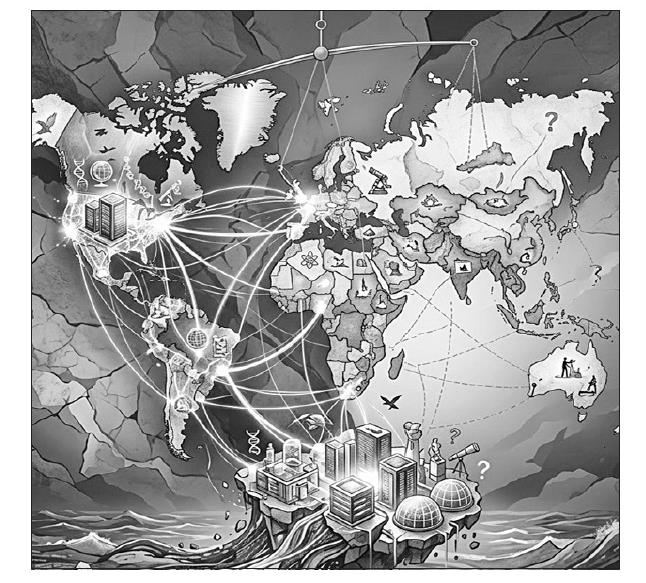
A MISPLACED focus on publication and citation numbers can create incentives that may not always encourage genuine scientific leadership. Universities with limited resources may naturally seek more international partnerships because these collaborations improve their ranking performance. Most such partnerships are valuable and legitimate, but evaluation systems that simply count publications and citations may end up rewarding participation in large research networks more than actual scientific leadership.
It is also important to remember that high collaboration rates do not mean the same thing everywhere. Countries that invest heavily in research, such as those working on artificial intelligence (AI), precision medicine, climate change, energy security and space exploration, often collaborate extensively because modern scientific problems require multinational expertise andinfrastructure.In allsuch cases, collaboration reflects scientific integration and specialisationratherthan weakness.
As a result, a collaboration rate of 75 per cent could indicate world-class research integration in one country, but limited domestic research capacity in another.
Yet, ranking systems generally treat both situations in much the same way.
Citation numbers also deserve similar caution. Internationally, collaborative papers often receive more citations because they involve larger teams, multiple institutions, wider dissemination and greater international visibility. This means that citation counts may reflect the size and reach of a research network as much as the quality of the research itself.
Since citation numbers play a major role in university rankings, institutions with extensive international networks can gain significant ranking advantages even when their independent research capability is difficult to judge.
None of this means, however, that global rankings are useless. They provide valuable data about research visibility, internationalengagement and academic reputation.
However, they may not fully capture the deeper strength, resilience, and independence of a country’s research system. For that reason, future ranking methods could look beyond citation counts and include indicators such as domestic research productivity, leadership in international projects, first and corresponding authorship, diversity of funding sources, development of local research infrastructure, postgraduate training capacity and technology transfer.
The recent debates about Pakistan’s position in global rankings have rightly highlighted the country’s limited resources.
That remains a major challenge. But understanding rankings requires looking not only at how much money universities receive, but also at how research impact is produced. The key question is not whether international collaboration is good or bad.
It is whether countries like Pakistan are using collaboration to build stronger scientific capacity at home, or simply to improve their visibility in global rankings.
Waseem Hassan Peshawar