
CCORDING to the Global Cancer Statistics for 2020, Pakistan had 25,928 reported cases of breast cancer and 13,725 fatalities. But such baseline data is often missing in the findings shared by experts from Pakistan at local as well as international symposia.
This is often in stark contrast to the findings shared by the institutions from the rest of the developing world, for instance Brazil or India, who cite policies and decisions made on the basis of, among other things, electronic medical records.
The Brazilian national health card as well as its cash handouts scheme are some of the innovations in a healthcare system that has been extremely successful, and even Bill Gates is a fan. In the last three decades, it has helped cut the maternal mortality rate by 60 percent and the underfive child mortality by 75 percent.
The health card in Brazil is linked to a centralisedelectronicdatabasecontaining patient health records, facilitating access to care and ensuring continuity of treatment. The use of electronic medical records (EMRs) has helped improve healthcare access, reduce administrative burdens and enhance patient outcomes across the South American country.
In India, private healthcare providers have implemented EMRs across their networks of hospitals and clinics. Administrators note that the digitisation of patient records has helped streamline workflows and enhanced clinical decision-making, with the result being improved care coordination and patient outcomes.
In Pakistan, too, e-health and telemedicine has witnessed growth, particularly in the wake of the pandemic, with service pro-viders relying on data-driven solutions. The National Institute of Health maintains a data centre, which ostensibly is the central database for all diseases in the country.
The country even has a ‘National Digital Health Framework of Pakistan (20222030)’, rolled out in November 2021. The document states that there is ‘poor availability and quality of EMRs in Pakistan. Data storage and retention in the health sector are also substandard. Unorganised datasets lead to poor analysis, resulting in faulty trends and predictions.’ A cornerstone of the country’s digital health (dHealth) policy is improving patient data management through the creation of a ‘robust and secure patient data management system.
A game changer Medical records are used to track events and transactions between patients and health care providers. They offer information on diagnoses, procedures, lab tests and other services. As with other diseases, the national registry is unable to keep updated records of the cases of breast cancer across Pakistan. It results in guesstimates or hypothetical numbers to quote our national figures, as I have witnessed on multiple occasions.
Despite a passage of decades since our independence, we still don’t have a consolidated system to manage data, which is essential to decision-making and policy formulation on healthcare issues.
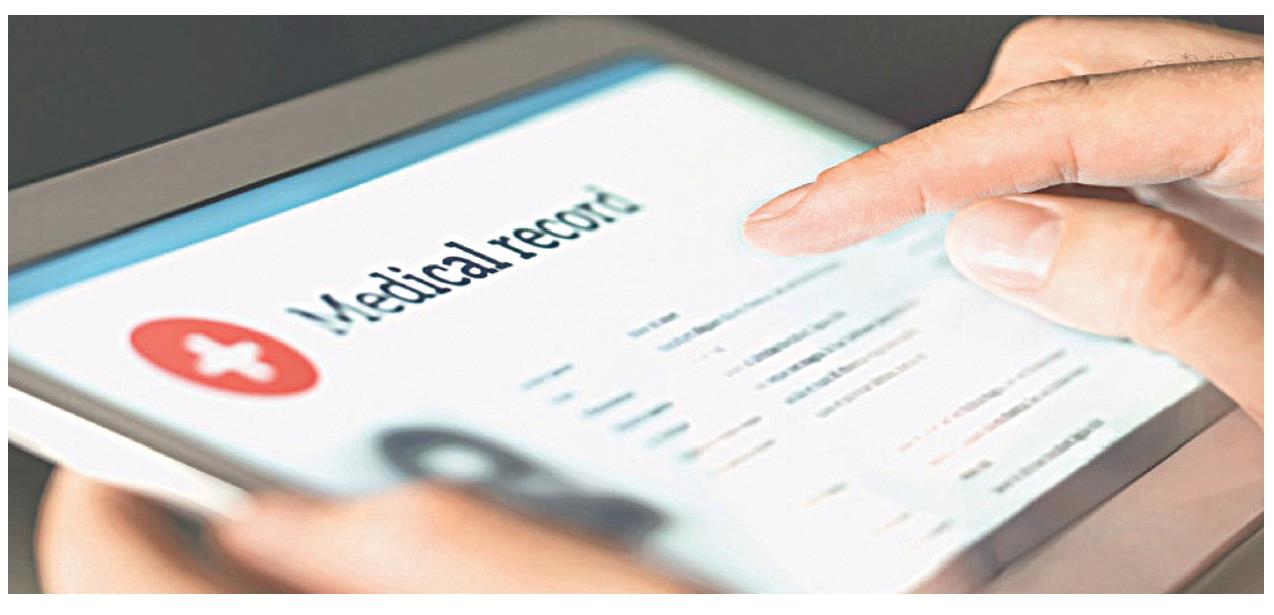
Other than bringing up-to-date information to healthcare providers’ fingertips, EMRs significantly impact the workflow in healthcare systems, by changinghowpatient information is documented and accessed.
With the implementation of EMRs, patient information is stored electronically.
It can be accessed from any computer ormobile device with access to the system, which has increased the efficiency of healthcare systems. It allows physicians and other healthcare professionals to quickly access patient information and make informed de cisions about their care. They can access duplicate records, ensuring everyone is up-to-date on the patient’s history, medications and test results, particularly when multiple healthcare providers are treating a patient.
This has improved the accuracy of diagnoses and treatment plans, ensuring patients receive the most appropriate care.
Predicting patterns Private hospitals across the country rely on patient records for their repeat visitors.
However, these slivers of databases exist in a silo and are not part of any nationwide database. One reason, often cited by hospital executives and administrators, is the sensitivity of the data involved, and concerns regarding its protection and privacy, which make these administrators reluctanttoshare the data.
EMR systems are also used by smaller organisations, particularly not-for-profits operating in smaller towns and villages. I am responsible for one such non-government organisation, which focuses on common diseases such as diabetes, hepatitis, asthma, malnutrition, high cholesterol, high blood pressure, anaemia and so on.
Our data findings in Sindh helped us determine the incidence of anaemia in school-going children in the small town of Gharo. Based on the findings, we even presented a paper (abstract) at a conference of the Pakistan Pediatric Association.
Another useful use of EMR is tracking immunisation of children and record-keeping. The data helps establish the status of allvaccinations as well as identification of areas that are hotspots or likely to witness a particular outbreak. It also helps the government assess its vaccine requirements and share the same with bilateral and multilateral donors. It is imperative that the government supports such interventions and maintain a list of healthcare providers using EMRs, so their datasets can become part of a nationwide database.
Creating a national registry Healthcare systems can collect and analyse such data on patient outcomes and identify areas where improvement can be made, leading to more effective treatment plans, better patient outcomes, and more efficient use of resources.
If you take such tests regularly, examining them over time can provide valuable information. Mammograms, bone density scans and prostate screenings can also helpyou catch certain potentially serious conditions before they develop. Looking at your data from these tests over time can also help you ask your doctors informed questions.
This system is vital particularly when a patient arrives in an emergency department, as it would quickly provide the treating medical staff essential healthcare-related information.
A national registry is the only solution to such a situation, despite the many challenges it poses from establishing and integrating a digital health infrastructure and ensuring data governance and privacy, to developing regulatory frame,works and resource and capacity development, among others. The challenges might be many, but they are not insurmountable, and pale in comparison to the long-term benefits EMRs promise. This is edited version of an article earlier published in Dawn