
Karachi’s industries are expected to generate exports, employment and tax revenue, yet they struggle to obtain uninterrupted water, gas at contracted pressure, affordable electricity, functional roads and a business-friendly regulatory environment.
These constraints do not stop at individual firms: they reduce industrial productivity, discourage new investment, restrict employment, weaken exports and ultimately slow the country’s economic growth.
The most serious of these problems, and the one least discussed, is sewerage and industrial effluent. SITE and Korangi, two of the largest industrial estates in the country, still have no combined effluent treatment plant. The Sindh Environmental Protection Agency (SEPA) has itself told the Sindh High Court (SHC) that about 80 million gallons per day of untreated industrial wastewater and 417 MGD of domestic sewage reach the sea every day. The provincial CETP (common effluent treatment plant) project, planned at 94 MGD across the industrial zones, has been delayed for about 20 years, moved from KWSC to the industries department in 2020, and has now shrunk to a single 20 MGD plant for SITE, which is unlikely to become operational before 2032.In the meantime, SEPA serves notices on individual units, most of which have neither the space nor the means for in-house plants, while collapsed trunk sewers leave even treated effluent with nowhere to go. Until the Sindh government builds the (approved) treatment plants, enforcement against small units cannot be fair.
In Karachi, many authorities deal with the industry but none owns its problems. KWSC, SITE Ltd, KMC, KDA, the towns, the canton-ments, SSGC, K-Electric, SEPA, SBCA, FBR, SRB, Excise, SESSI and EOBI all act separately, and industrialists report dealing with as many as 27 departments. SESSI and EOBI still maintain separate registrations and even Sindh’s Rs43,000 minimum wage, effective from July 1, 2026, was notified on Aug 17. Inspections multiply, but accountability for service delivery rests with no one.
The absence of ownership is felt first in water supply. Karachi needs about 1,200 MGD but receives 550-600 MGD, and up to 30pc is reportedly diverted through illegal hydrants.
Industrial lines run dry while the same water is sold back by tanker at a multiple of the official rate; the April 2025 disconnections in F.B. Area hit an estate that houses over 70pc of the city’s export-oriented units.Gas tells a similar story.
SSGC imposed 48-hour and 24-hour suspensions on industry in January and April 2026 and cut supply again in March when RLNG cargoes failed to arrive, while units billed for 8 psi report receiving 4-6 psi. Industry has also had to go to court against retrospective levies: in January 2026, the SHC held captive-levy bills for periods before March 7, 2025 ultra vires.
Electricity remains the single heaviest cost.
Despite the February 2026 cut of up to Rs4.58 per unit, industrial power averaged about 15.5 US cents/kWh over 2023-25, against 5-9 cents in India, Bangladesh, Vietnam and China. Relief promised to Karachi has not arrived either: Rs33 billion of the Covid consumption package is still pending. At the same time, the June 2026 twopart tariff plan would raise fixed charges for units drawing less than their sanctioned load. The government should reconsider fixed capacity charges, particularly for SMEs that hold sanctioned load they cannot use because of market conditions or expensive electricity.The reliability of supply is also at risk. Nepra’s review decisions, notified as SROs 1643-1646 on Sept 23, 2026, cut KE’s average tariff from Rs39.97 to Rs32.37/kWh, approved the lowest operations and maintenance figures and ordered its investment plan reassessed. Because of the uniform tariff, consumers’ bills do not fall; what falls is the utility’s maintenance and network budget, which shows up as feeder trips, transformer failures and delayed load extensions in industrial areas. Any tariff saving must come with ring-fenced maintenance and investment for industrial feeders and Nepra-monitored reliability targets.
The industry already pays for municipal services it does not receive.
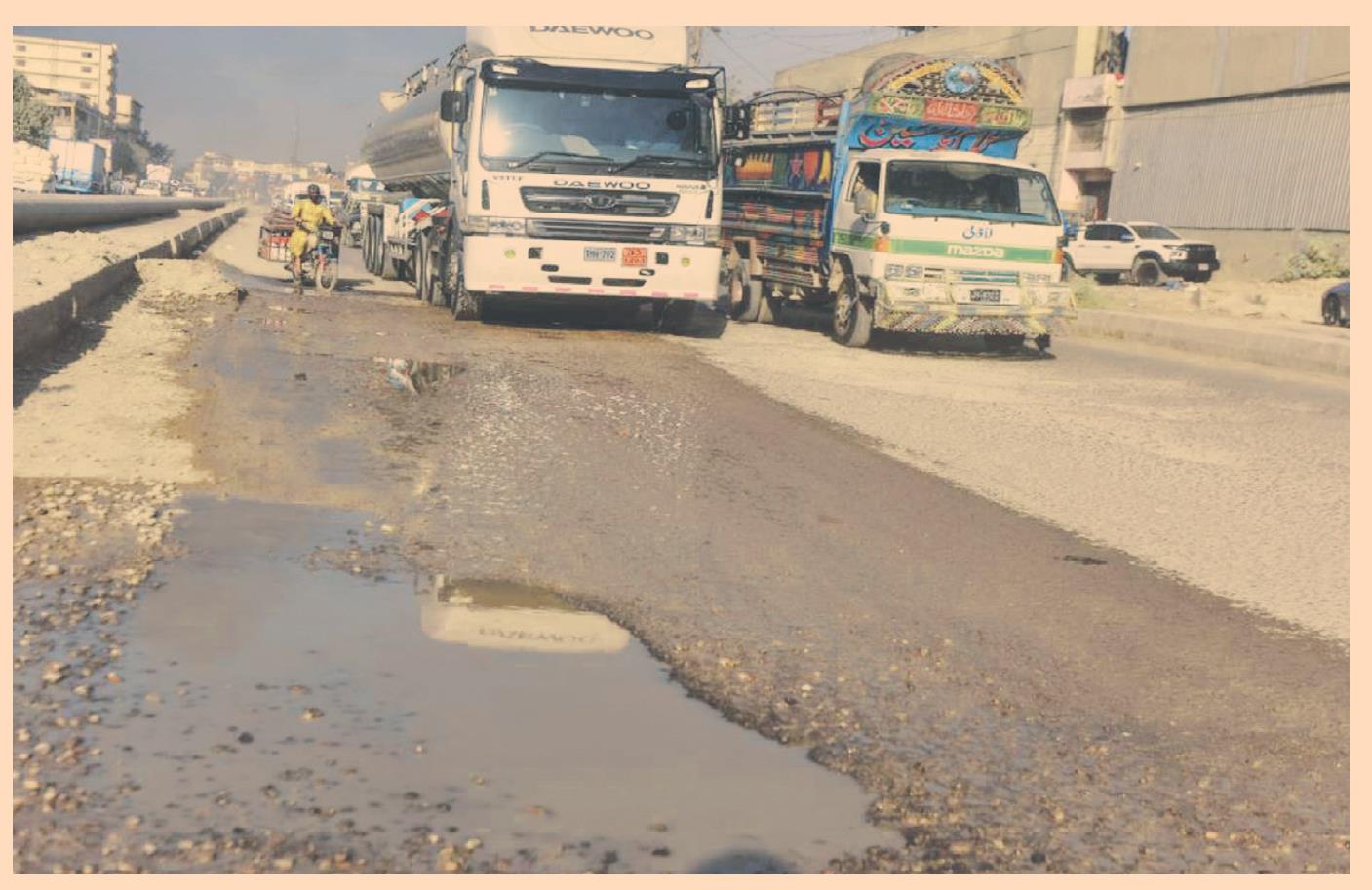
KMC collects the municipal utility charges and taxes through KE’s bills, a flat Rs400 per industrial connection from August 2024 and later Rs750, of which the power company keeps 7.5pc and half the remainder offsets KMC’s own power dues. The Infrastructure Development Cess is also drawn largely from the industrial zones. Yet SITE’s roads are broken and Korangi is flooded whenever the Malir River and causeway overflow.
Repairs arrive as one-off packages, such as the Rs9.2bn approved in December 2025 (Rs2bn each for SITE, Korangi and Landhi, Rs1bn for Bin Qasim, Rs860.55m for F.B. Area, Rs721.74m for North Karachi and Rs700m for SITE Superhighway) with a six-month deadline, rather than as a recurring maintenance budget.
Encroachments occupy plots and roadsides, and heavy vehicles areconfined to the hours of 10pm to 6am under rolling Section 144 orders, adding time and cost to every movement to the ports. The taxes raised in each estate should be spent on that area.
Nobody plans to work together as the repaired roads are dug up by K-Electric, SSGC and KWSC in turn.
SSGC alone paid Rs11.9bn to KMC, the town municipal corporations and cantonment boards between July 2024 and June 2025, yet the excavated roads remain broken, and in October 2026 the Sindh Assembly’s Public Accounts Committee had to seek town-wise records of how the money was used.
A road is built, a utility cuts it open, and the cycle restarts, because there is no central planning between departments. The Sindh Solid Waste Management Board, meanwhile, does not regularly lift waste from industrial areas, so garbage blocks drains.
Road-cutting charges should be kept in an escrow account tied to certified restoration within a fixed period and every utility’s works should be approved through one city-wide excavation plan before any road is built or relaid. The tax system adds a liquidity squeeze. The statutory 72-hour sales tax refund remains unimplemented; in September 2026 FBR ordered Rs126bn of pending refunds and rebates to be paid over two to three months, even as field offices demanded section 4C super tax in a single lump sum. Liabilities should be set off automatically against verified refunds.
Small firms carry all of these burdens with the least capacity to absorb them. Karachi does not need further announcements. It needs a clearly accountable authority for industrial services and rules that stay fixed long enough to justify reinvestment. The writers are Karachi-based industry leaders