
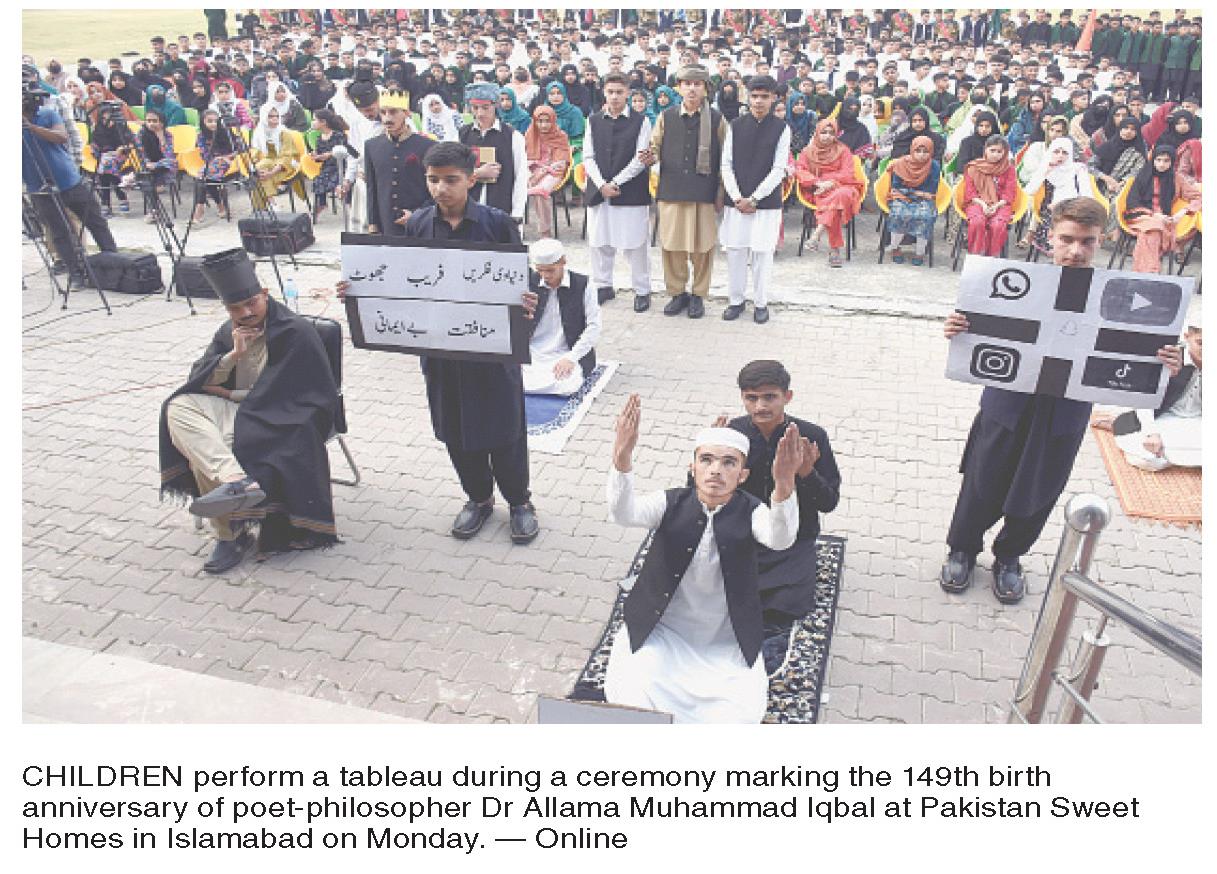
ISLAMABAD: Stressing that the truest tribute to Allama Muhammad Iqbal lies in action rather than rituals, Senate Chairman Syed Yousaf Raza Gillani and National Assembly Speaker Sardar Ayaz Sadiq on Monday called for a unified effort to realise his vision for a democratic and prosperous Pakistan.
The Senate chairman in a statement paid tribute to the poet of the East on his 149th birth anniversary, describing him as a visionary thinker whose philosophy awakened the political consciousness of the Muslims of the subcontinent and laid the intellectualfoundations of Pakistan.
Iqbal’s vision of a self-reliant, enlightened and united nation remains a guiding force for Pakistan’s progress,’ said the Senate chairman.
He said Iqbal’s philosophy of Khudi, self-respect, unity and purposeful action continues to inspire generations.
Iqbal envisioned a nation empowered by knowledge, guided by moral principles and committed to justice, dignity and collective progress.
‘Iqbal did not merely dream of an independent homeland; he envisioned an awakened, empowered and selfrespecting nation capable of determining its own future,’ he remarked.
Mr Gillani said strengthening democratic institutions, upholding constitutional values and ensuring equal opportunities were essential to realising Iqbal’s vision.
The NA speaker also paid tribute to Iqbal, saying his poetry, philosophy and intellectual legacy awakened the Muslims of the subcontinent to the values of self-respect, freedom, unity andnational consciousness.
The speaker said Iqbal was not merely a great poet but a visionary thinker whose ideas profoundly influenced the intellectual and political awakening of the Muslims of the subcontinent.
He said Iqbal’s historic Allahabad Address articulated a political vision that became an important intellectual foundation for the struggle that ultimately led to the creation of Pakistan.
Mr Sadiq said Iqbal envisioned a society rooted in justice, dignity, equality and moral responsibility, where individuals could develop their intellectual, spiritual and moral potential.
He urged young Pakistanis to makeknowledge, education, research, innovation, hard work and character-building integral parts of their lives and to transform their abilities into constructive contributions towards national development.
He reaffirmed that parliament would continue to play its constitutional role in strengthening democracy, promoting public welfare and advancing the ideals of a peaceful, progressive and prosperous Pakistan in accordance with the vision of the country’s founding fathers.
Deputy Speaker National Assembly Syed Ghulam Mustafa Shah described Iqbal as one of the most distinguished intellectual, philosophical and literaryfigures in the history of the subcontinent. He said Iqbal’s poetry instilled among the Muslims of the subcontinent a renewed sense of self-respect, confidence,dignity and purpose.
Through his powerful message, Iqbal encouraged individuals and nations to recognise their potential, overcome intellectual and moral stagnation and strive for a better future.
PTI pays tributes to Allama Iqbal Pakistan Tehreek-i-Insaf (PTI), while paying tribute to Iqbal, stated that his vision of selfhood, freedom, justice remains a guiding light for Pakistan.
In a statement issued by its central media department, the PTI said through his philosophy, poetry and visionary ideas Iqbal instilled in Muslims the spirit of selfhood, freedom, dignity and political consciousness. His vision of Pakistan was rooted in the concept of an independent, sovereign and dignified state where every citizen would enjoy equal rights, justice, freedom and respect.
Referring to the political, economic and constitutional challenges facing Pakistan, PTI said overcoming the country’s crises required embracing Iqbal’s vision by ensuring national dignity, the rule of law, democratic values and the sovereignty of the people.
Drawing inspiration from the vision of Quaid-i-Azam Mohammad Ali Jinnah and Iqbal, the PTI said it was a national responsibility to transform Pakistan into a state where the people remain the ultimate source of power and authority, the Constitution is supreme, institutions operate within their constitutional boundaries, and no citizen is deprived of fundamental rights.