
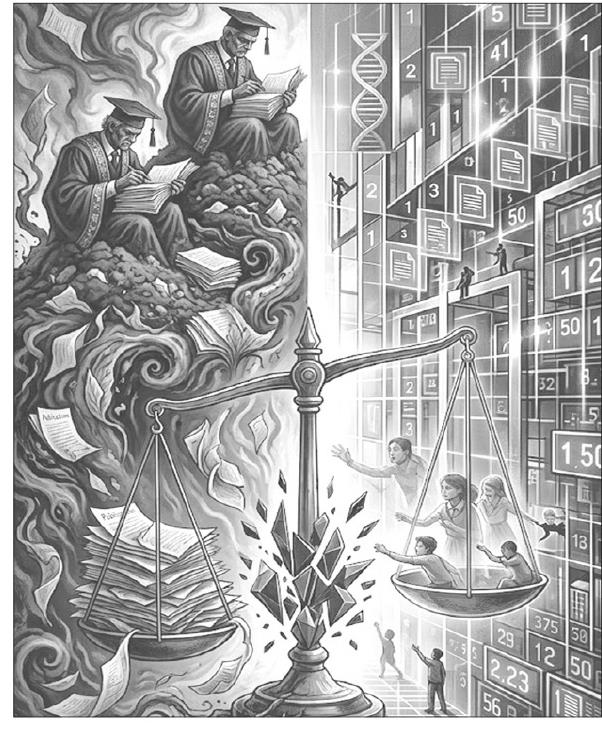
IN many Pakistani universities, a troubling pattern is prevalent in which senior faculty members, including professors, associate professors and assistant professors, devote a disproportionate share oftheirenergy to the politics of promotion rather than to academic pursuits.
Since career advancement is tied to publication count, administrative positions, committee memberships and favourable relationships with selection boards and higher authorities, academics find it more rewarding to cultivate networks, form factions, and lobby for positions than toinvest time in mentoring. The requirements for promotion set by the Higher Education Commission (HEC), such as a certain number of research papers and a record of supervised theses, have pushed faculty towards a numbers-driven approach.
Supervision is then treated as a box to ticl(, with students signed up in large numbers, but given little real guidance, feedbacl( or intellectual engagement.
As a result, scholars often wait months for comments on thesis chapters, receive superficial reviews, or are left to navigate research design, methodology and writing largely on their own. In some of the cases, supervisors add their names to students’ worl( without meaningful contribution, or push students towards quicl(, low-quality publications that serve the faculty member’s promotion file.
Addressing the problem requires reforms that reward genuine mentorship, such as transparent promotion criteria that value supervision quality, realistic limits on the number of students per supervisor, regular progress monitoring, student feedbacl( mechanisms, and institutional cultures thatprize teachingand research integrity over political manoeuvring.
Without such changes, the academic mission of Pal(istani universities would continue to be completely overshadowed by the pursuit of position and prestige.
Tufail Dawar North Waziristan