
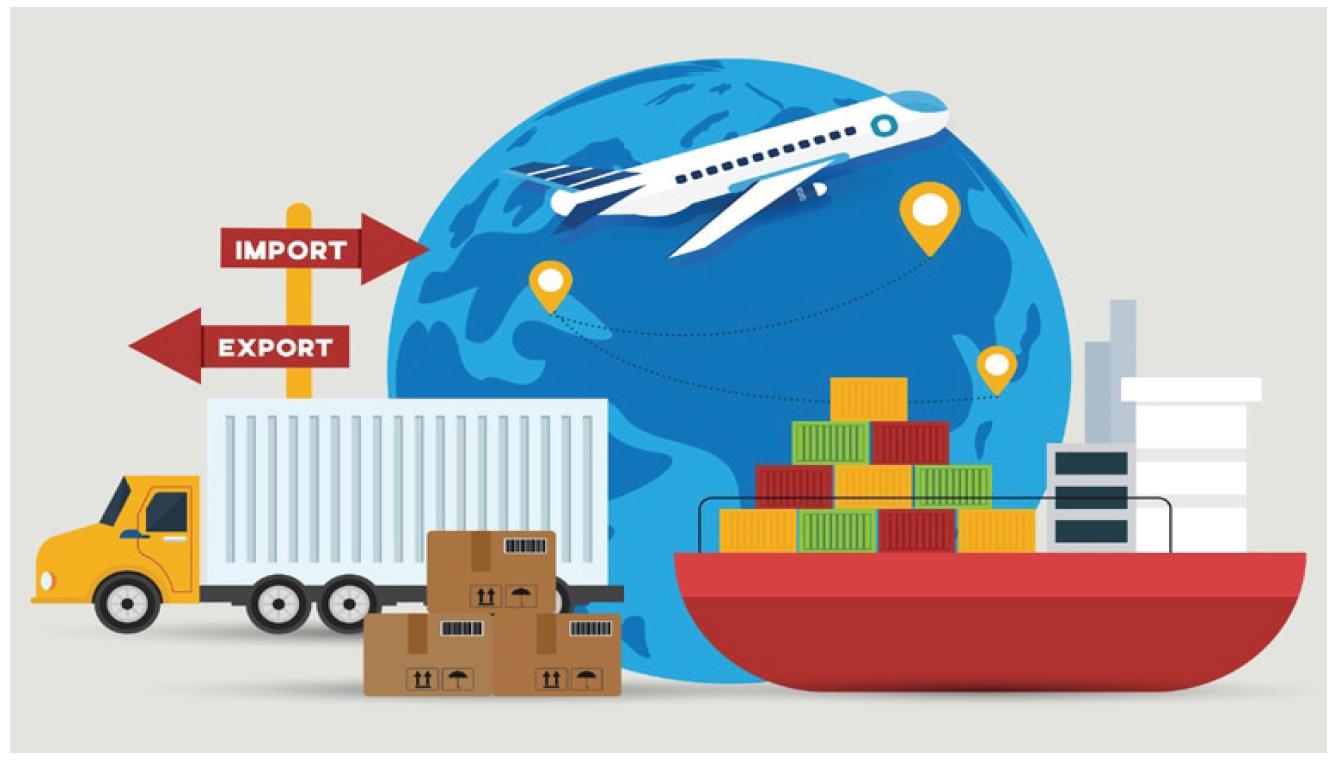
EXPORTS are a key component of the economic development and prosperity of countries in today’s globalised economy. Countries earn foreign exchange, provide jobs, promote industries and improve their competitiveness in the world market by selling goods and services to international markets. The export-led growth has emerged as an important policy for the developed and developing economies to achieve sustainable economic growth and long-term prosperity.
Exports are a reflection of the potential of businesses to compete in the international marketplace by providing products and services of a quality, innovation and value, accepted by international markets, linking local producers with consumers globally, from agricultural goods and textiles to high-tech products and professional services.
Given their lucrative outcome, one of the greatest advantages of exports is that they help in the growth of the economy. As such, an increase in the size of the business beyond the domestic market leads to an increase in production, income and national income. Moreover, expanding scope of exports not only promotes industrial growth, but it also enhances investment, unlocking employment opportunities in different areas of the economy. Thus, when demand for exported products increases,companies spend money on new technologies, training employees and expanding capacity, which further increases productivity and efficiency.
Besides, exports are equally important for earning foreign exchange reserves. As a matter of fact, foreign currency receipts, in a vast economic perspective, enable countries to import necessary commodities, equipment, raw materials as well as technology that may not be available locally.Truly, good export results effectively help maintain a more positive balance of payments and promote economic stability.
Given this, in developing countries, export earnings can be an integralsource of raising funds for infrastructure, education, health and other public services.
Over the years, global trade has undergone a considerable transformation with the development of transportation, communication and digital technology.E-commerce, digital marketing, and global supply chains allow businesses today to access markets on an international scale like never before. Small and medium-sized businesses (SMEs) can now easily target customers from around the world without the need to go through the hassle of exporting to them. This democratisation of trade has created new opportunities for entrepreneurs and businesses of all sizes to enter into global trade.
Apart from this, quality and innovation are two key elements that can ensure export success. There are many products and services available from various countries for international customers and competition is becoming more and more fierce. To keep up with the changing needs of customers, exporters need to prioritise quality assurance, international standards, and continuous product improvement. Businesses with a strong focus on research and development, product innovation, and customer satisfaction are more likely to thrive in international markets.
The growth of exports has also been supported by trade agreements and international partnerships, which have helped to lower trade barriers and improve access to markets. Businesses can gain access to new markets through bilateral/multilateral agreements under favourable conditions.
These types of deals can lower tariffs, streamline customs processes, and promote investment between nations. This enables exporters to be more competitive and become more visible abroad.
The agriculture sector continues to be a major export earner for many countries.
Agricultural exports not only bring foreign exchange earnings but also contribute to rural development and livelihoods. There is often high demand for products like fruits, vegetables, grains, seafood and processed foods in overseas markets. Improved competitiveness and access to premium global markets can be achieved through modern farming methods,quality assurance systems and sustainable practices.
Furthermore, manufacturing export is also an important driver of economic development.
In many economies, export revenues are significant for industries like textiles, garments, pharmaceuticals, automotive parts, electronics, and engineering products. A robust manufacturing sector generates jobs, fosters technology and enhances industrial capabilities.
Governments will provide incentives, infrastructure development and export promotion to manufacturing exporters.
The services sector, on the other hand, has also become a significant exporter of services.
Many countries export large amounts of information technology, financial services, consulting, health, education, tourism and creative industries. Digital technologies have enabled service providers to provide services across borders efficiently, bringing new opportunities in the global marketplace. Service exports are likely to be more significant in international trade in the future as knowledge-based economies continue to grow.
Sustainability is a major factor in international trade. Environmentally friendly products and ethical corporate behavior are becoming more and more expected by consumers, business and governments alike. In this scenario, sustainability, resource efficiency and social responsibility are have turned to be significant factors for exporters who want to have a competitive edge in the international market.
By employing sustainable production methods, brands not only boost their reputation but also foster long-term business resilience and environmental responsibility.
Exporters encounter a number of obstacles, although there are many opportunities.
Exchange rate volatil-ity, shifting trade policies, regulations, logistics, and geopolitical risks can impact export performance. To tackle these challenges successfully, businesses need to be flexible and up-to-date. A good export strategy will involve effective risk management, market research and strategic planning.
Governments, trade organisations andindustry associations are important exporters’ supporters. These institutions assist businesses in discovering opportunities and challenges for export activities through export promotion programmess, training, trade missions, and market intelligence services. In developing an enabling environment for export growth and competitiveness, public-private partnership is frequently nee de d.
Innovation, digital transformation and shifting consumer preferences will drive the evolution of exports in the future.
The supply chain and trade processes are undergoing a transformation due to emerging technologies like artificial intelligence, automation, blockchain, and advanced analytics. By adopting these technologies, companies can boost efficiency, increase transparency, and better meet market needs.
Eventually, exports continue to be a key pillar of economic growth and world prosperity.
They provide employment, earn revenue, encourage innovation and improve international relations.
Opportunities for export growth are greater than ever as businesses continue to seek new markets and make use of technological advances.
In the era of globalisation, exporters can overcome the challenges of international trade and make a positive impact on a more interconnected and prosperous world by prioritising quality, competitiveness, sustainability, and innovation.