
We call young people, particularly Gen-Z, entitled, smart yet distracted, morally loose and permanently online. We rarely call them what they might actually be: a generation facing existential crises and navigating psychosocial challenges earlier than previous generations, often during their childhoods and early adolescence, with less guidance than their predecessors.
At the same time, they reach traditional adult milestones (such as driving, marrying and financial independence) much later, all of which lead to a unique maturity paradox.
In traditional developmental psychology, like Erik Erikson’s stages of psychosocial development, identity formation versus role confusion peaks in late adolescence.
However, Gen-Zhad to build a public-facing identity much earlier due to social media algorithm demands. Further substantiating this is social psychologist Jonathan Haidt who, in his book The Anxious Generation, argues that the shift from a play-based to a phone-based childhood has made young people more psychologically vulnerable.
Dar-i-Nijaat, another compelling creation by writer Umera Ahmed and directed by Saqib Khan, offers an interesting psychological portrait of this generation.
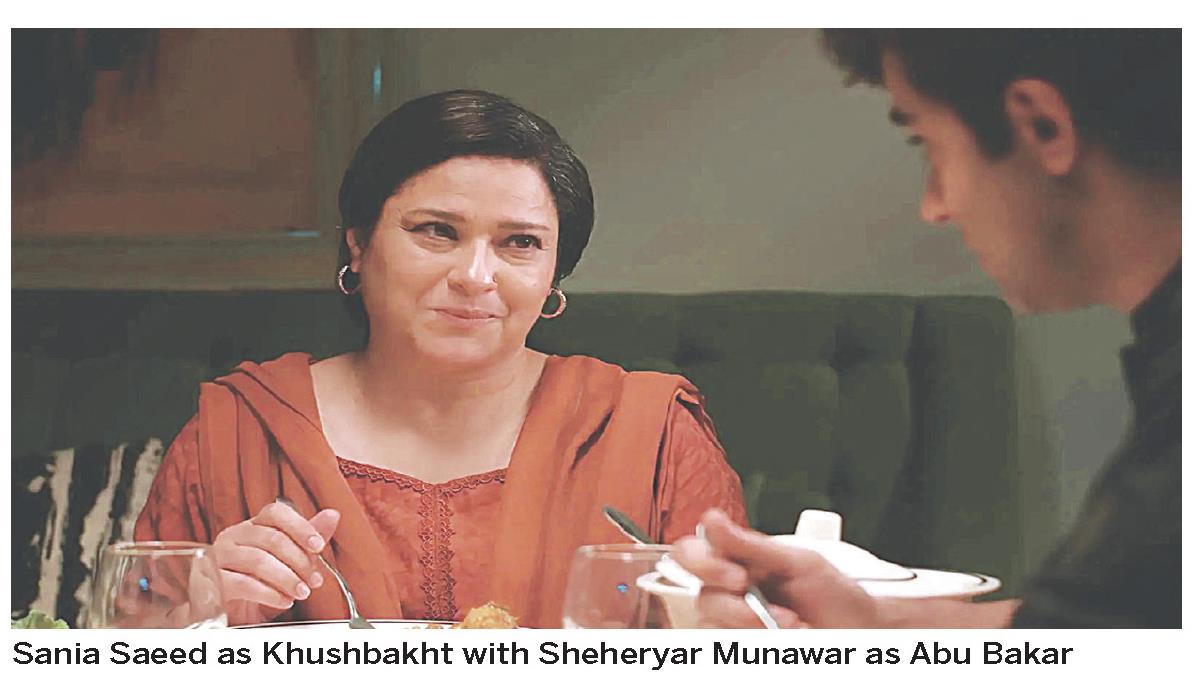
Through four young people Zaryab (Durefishan Saleem), Zamil (Nameer Khan), Abu Bakar (Sheheryar Munawar, who may be a few years older than the others and closer to the Millennial-Gen-Z cusp) and Hamna (Romaisa Khan) the drama explores the collision of love, desire, duty, faith, identity and the search for belonging and meaning.
Dar-i-Nijaat is more than a tale of morality among young people making mistakes. It is a story about the emotional histories of four young people that lead to their choices, the relationships that shape them, and the possibility of finding a way forward.
Here is a closer look at each character and the psychological stresses they are undergoing.1. ZARYAB: ENTITLED ANXIOUS ATTACHMENT IN FREEFALL Zaryab is the middle child of liberal, high-society, status-conscious parents.
Outgoing, modern, accepted to Harvard and accustomed to considerable freedom, she appears to have received affection without sufficient boundaries. Her grandmother, Kishwar (Saba Hameed), is the household’s only moral compass, but her wisdom does not always influence Zaryab’s decisions.
The prognosis: Zaryab’s relationship with Zamil highlights the Anxious Attachment pattern, coined by developmental psychologist Mary Ainsworth in the 1970s, which built on John Bowlby’s work on the Attachment Theory. It is often associated with a deep fear of abandonment, heightened sensitivity to rejection and a constant need for reassurance. It can develop when emotional availability and security from others havebeen inconsistent, causing a person to depend on external validation to regulate an often uncertain sense of self, even when they appear stable and confident.
Zaryab seems to view love as something that must be preserved even at the cost of her own emotional boundaries. She gets engaged to a reluctant Zamil and consequently lives with him in Boston.
She mistakes attachment for security. The problem is not that she wants to be loved it is that being loved becomes the measure of her worth. When Zamil leaves her and humiliates her, the rejection threatens more than a relationship. It threatens the identity she has built.
Her response, including her decision to marry Abu Bakar, can be seen as an attempt to find safety and restore her damaged sense of worth, while also seeking to spite and disprove Zamil, who had said that even a man like Abu Bakar would not marry her.Her need for assurance is also evident, to an extent, after her marriage to Abu Bakar, as she chooses to dress and behave more conservatively.
Zaryab’s panic attacks as she navigates the aftermath of her break-up are particularly important. We rarely acknowledge that the end of a significant relationship can produce a genuine grief response. Several emotions converge within her at this point: guilt about her past choices, fear of being abandoned and shame at having been rejected. When guilt becomes shame, the internal message changes from ‘I made a mistake’ (behaviour) to ‘I am a mistake’ (identity). This can intensify anxiety and emotional distress.
What makes her journey hopeful is the possibility of a different relational experience. Her grandmother, mother-in law Khushbakht (Sania Saeed) and Abu Bakar then offer her something she needs: guidance without humiliation, care without immediate judgement and an opportunity to rediscover her own agency.
How can she heal? By learning that she cannot entirely depend on her husband or anyone else to rescue her. She must learn to sit with grief, establish boundaries, understand that rejection does not diminish her worth and develop an identity that can survive without another person’s approval.
2. ZAMIL: THE AFFLUENT AVOIDANT WHO MISTAKES PERFORMANCE FOR TRANSFORMATION Zamil comes from an affluent background where material gratification is readily available, but he is emotionally insecure. His disappointment at being rejected by Harvard is significant. This is because he lives in a society where educational achievement is often treated as a measure of intelligence, status and success. Hence, it feels like a cause of Identity Collapse (psychological and structural destabilisation) rather than an ordinary setback, especially in light of the fact that Zaryab has been accepted to Harvard.
The prognosis: Zamil’s behaviour can be seen through the lens of Avoidant Attachment, also conceived by Ainsworth.
Such avoidant strategies often involve minimising emotional needs and emotional or physical intimacy, maintaining distances and relying heavily on self-sufficiency.
Vulnerability can feel threatening because dependence on another person seems like a loss of control. For someone whose identity rests on competence and achievement, failure can cause a painful, emotional void.
Zamil’s response takes different forms, including escapism and substance abuse.
His decision to break up with Zaryab is an escape from emotional accountability.
Instead of confronting vulnerability, he seeks a new identity that lets him feel superior to Zaryab: in his case, one built around what he perceives as the religious and righteous path.
Zamil changes his outward identity (by donning a beard, among other things) without confronting the consequences of his previous choices. His judgement of Zaryab is particularly revealing. The woman he once loved is now viewed through a moral hierarchy that seems to place him above her. However, developing humility, empathy and accountability hallmarks of most religions requires sustained inner work, which he does not bother with.
Zamil’s search is not necessarily misguided. He appears to recognise that material gratification cannot provide lasting fulfilment. His difficulty lies in replacing one external identity with another, without discovering the internal centre that leads to true transformation. His real challenge is vulnerability, acknowledging failure, accepting responsibility and recognising that another person’s mistakes do not make him morally superior.
How can he heal? By facing his vulnerability, recognising his personal triggers, relinquishing control and judgement, practising emotionally open communication and filling the emotional void by forgiving himself and those around him.
3.ABUBAKAR:THE SECURE RESCUER WHO DIDN’T LEARN ABOUT BOUNDARIES Abu Bakar is perhaps the drama’s most intriguing character, because he challenges our assumption that a good person is free of their inner demons.
Raised by a single mother, he grew up in a middle-class environment, experiencing his father’s absence as well as rejection and mistreatment from his wealthy paternal family.
Yet, he emerges as a disciplined, compassionate and accomplished man. His mother deserves considerable credit for the values she has instilled in him. His spiritual and religious grounding also appears integrated into his everyday conduct.
His simplicity, discipline, sense of responsibility and humility suggest a belief system that functions as an inner anchor rather than merely an outward identity.
The prognosis: Abu Bakar displays many characteristics associated with Ainsworth’s Secure Attachment style: the capacity to trust, show empathy, remain emotionally available and have healthy relationships. He can express disagreement without seeing it as a threat to a relationship.
However, his relationship with his mother contains a contradiction.
Although he can express his preferences, he struggles to establish boundaries when her emotional expectations are involved.
His willingness to marry Zaryab because of an obligation his mother feels towards Zaryab’s grandmother raises the question of Emotional Enmeshment a concept developed by psychiatrist Salvador Minuchin.
Emotional Enmeshment occurs when relational boundaries blur, and one person’s needs, expectations and emotional well-being become excessively intertwined with another’s.
Despite genuine love, Abu Bakar’s sense of responsibility towards his mother sometimes overrides his own autonomy.
This is where his Rescuer role one of the three dysfunctional roles identified by psychiatrist Stephen Karpman in the Drama Triangle theory comes in: a relationship dynamic in which a person compulsively tries to fix others’ problems while neglecting their own needs to feel valued and significant, as generosity and selflessness are held in high regard.
Abu Bakar’s willingness to honour his mother’s word and support Zaryab through her distress is admirable. But support must ultimately help another person stand independently, not create permanent dependency.
How can he heal? Abu Bakar’s journey should not be about becoming less good or less devoted. It should be about learning that compassion requires boundaries too that he can honour his mother without surrendering his individuality, and care for his wife without making himself responsible for repairing every wound she carries, or being a people-pleaser. His ultimate goal must be emotional freedom, not becoming indispensable to everyone around him.
4. HAMNA: WHEN GRATITUDE BECOMES IDEALISED ATTACHMENT Hamna is a lower middle-class girl and the daughter of Abu Bakar’s domestic employee. After a man continues to harass her, she is ‘rescued’ by Abu Bakar and develops a deep infatuation for him. In a twist of fate, she ends up marrying Zamil after he leaves Zaryab.
The prognosis: Hamna’s character offers a particularly interesting study of Idealisation and emotional dependency.
Sigmund Freud described Idealisation as the mental exaltation of another person without any alteration in that person’s actual nature. Her circumstances and her vulnerability make Abu Bakar’s kindness especially significant to her.
When someone becomes a source of safety in a moment of helplessness, gratitude can sometimes develop into an idealised attachment. The person is no longer seen simply as another human being with preferences and boundaries, but as the answer to an emotional need.
Her journey reminds us that compassion and boundaries must coexist.
Hamna’s attachment raises an important distinction: being grateful to someone should not mean claiming a stake in their life, nor does it necessarily promise romance.
How can she heal? By developing an independent sense of worth, one that does not depend on being chosen by the person she has idealised. She must also develop internal strength and form other meaningful relationships with people whom she can depend on in times of crisis, without becoming excessively dependent on them.
THE IMPORTANCE OF PREVIOUS GENERATIONS The emotional worlds of these young people have not developed in isolation.
Their family members, which include Baby Boomers, Gen-X and Millennials, have helped shape them.
The Baby Boomer grandparents represent a generation rooted in duty, tradition, endurance and family responsibility. Their strengths lie in resilience, moral continuity and the wisdom of lived experience.
Generation-X is shaped by duty and the pressure to provide for their families, secure futures and maintain social stability, often through sacrifice and hard work. Meanwhile, Gen-Y’s preference for gentle parenting often involves preserving their children’s individual identities, although this approach can have its own blind spots.
Each generation passes on something valuable to the next, but also something it has failed to resolve. In trying to correct their parents’ mistakes, they sometimes create new ones for their own children.
DAR-I-NIJAAT THE DOOR TO SALVATION? All four characters in Dar-i-Nijaat are clearly searching for something they have been unable to attain.
Oscar Wilde’s aphorism, ‘Those who see any difference between soul and body have neither’, offers an interesting philosophical insight. The soul represents our intellect, conscience and capacity for restraint, while the body embodies our desires, physical needs, pleasures and lived experiences.
Perhaps resolving existential criseslies in finding harmony between these dimensions rather than allowing one to overshadow the other.
Psychiatrist Viktor Frankl explored the human need for meaning as a fundamental motivation even when circumstances are difficult. Zaryab’s challenge is to understand that she is worthy even when she is not chosen.
Zamil must discover that changing an identity for validation and superiority is not the same as confronting oneself.
Abu Bakar must learn that goodness does not require endless giving. Hamna must discover that Idealisation does not give us ownership.
These are patterns we may recognise in our families, relationships and, if we are honest, within ourselves. We should turn them into opportunities to grow, offering the next generation empathy instead of judgement on their choices and developing the emotional vocabulary to understand them, because compassion does not mean excusing harmful behaviour. We are all carrying histories that others cannot see. We inherit patterns, repeat them, sometimes defend them and occasionally find the courage to question them.
Perhaps, the existential crises Gen-Z are undergoing are not a sign that they have lost their way, but that they are beginning a search for a more meaningful one. After all, they encounter adult questions and social judgement at a younger age than previous generations and, consequently, face difficult decisions and make mistakes earlier in life.
Instead of asking what is wrong with them, we should ask what they are struggling to find, and give them the guidance and emotional safety to find it. Our responsibility is neither to control their every choice nor to leave them to navigate life’s complexities alone, but to walk alongside them with empathy, open communication, mutual respect and healthy boundaries.
Ultimately, the greatest gift one generation can offer to the next is not a ready-made identity, but the emotional security and guidance to discover their own. In this way, we may be each other’s doors to salvation, because the right kinds of relationships can help us discover who we are.
These are precisely the conversations Dar-i-Nijaat encourages us to have with ourselves and others. Perhaps this, coupled with the drama’s ability to bring these issues to light, is what really makes it a success not just its ratings and virality.
The writer is an integrative therapist and founder of Khudi Wellness. She can be reached at shah.n.sarwat@gmail.com