
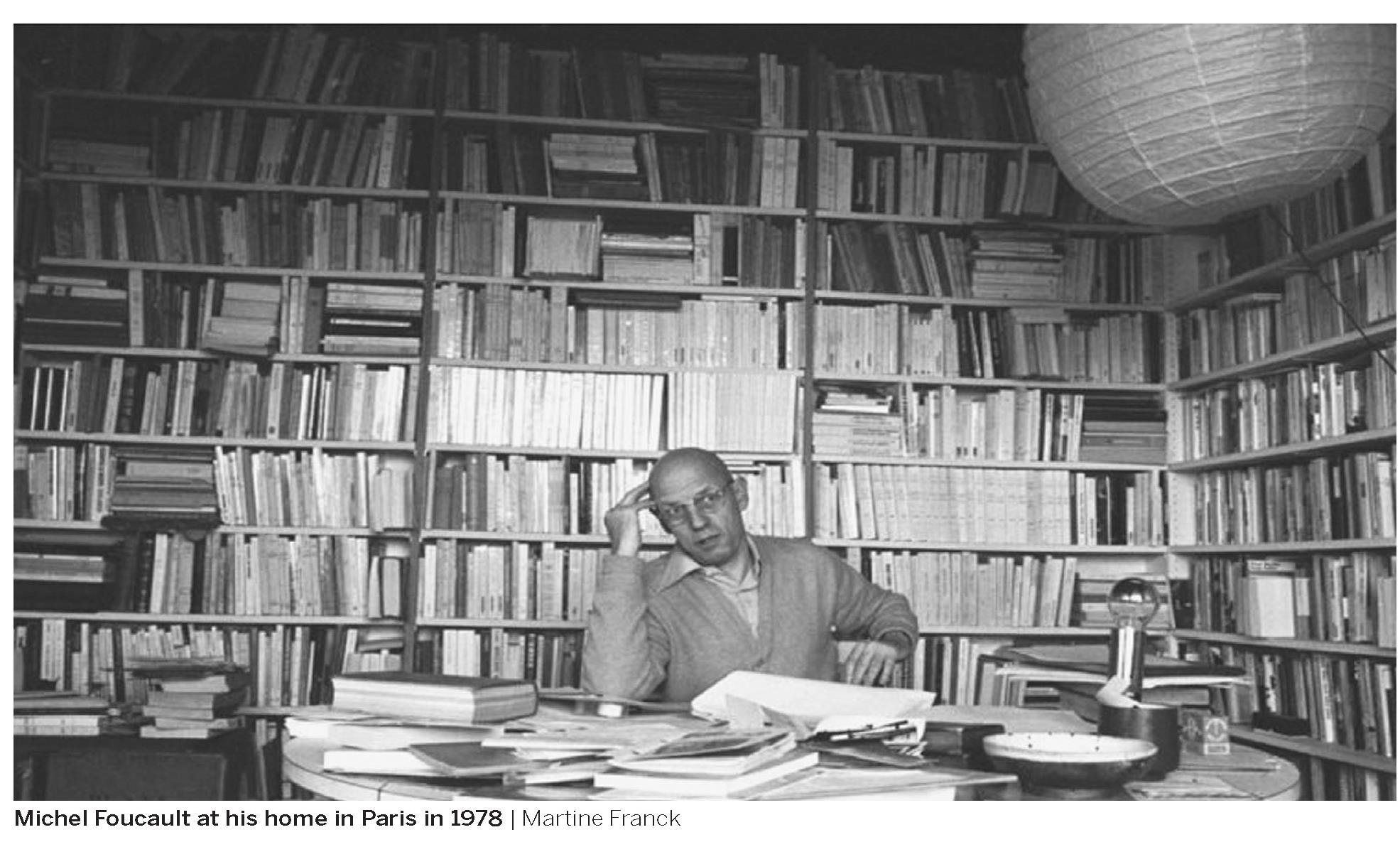
A century after his birth in 1926, Michel Foucault remains a thinker who changed the answers intellectuals gave and the questions they asked. Foucault wanted to know something more unsettling: how did societies come to regard certain forms of knowledge as truth, certain people as normal, and particular arrangements of power as natural? My own intellectual engagement with questions of power began in circumstances rather different from those of the French philosopher. Having spent four years in the Soviet Union during the 1980s, I witnessed a society that claimed scientific certainty about history while surrounding everyday life with institutions of ideological supervision.
The contradiction was difficult to miss.
A state committed, at least theoretically, to human emancipation could also regulate speech, discipline dissent and determine which interpretations of reality were permissible.
Foucault offers an illuminating way of understanding such contradictions.
Yet the Soviet experience also suggests a limitation in his approach: power cannot be understood without examining the economic structures, political struggles and ideological commitments that sustain it.
Foucault died in 1984, aged 58. His intellectual legacy, however, has outlived both the Soviet Union and many of the certainties of Western liberalism. From prisons and psychiatric hospitals to classrooms, sexuality and surveillance, his work remains disturbingly contemporary.
The post-Soviet panopticon The Soviet Union collapsed in 1991; the techniques Foucault investigated did not.
What survives is not a uniform political system but a repertoire of monitoring, classification and managed consent that can flourish under market capitalism as well as state socialism. Ideological orthodoxy may be enforced through national-security language, digital platforms, professional incentives or social pressure. Capitalism has not abolished the panopticon. In some settings it has made surveillance a profitable business.
Consider three very different cases.
In India, Freedom House’s 2025 and 2026 internet-freedom assessments documented content restrictions and shutdowns; the organisation has also raised concerns over state surveillance and pressure on critics. In Israel and the Occupied Palestinian Territories, Amnesty International documented the ‘Red Wolf’ facial-recognition system at checkpoints in Hebron, along with other technologies used to monitor Palestinian movement. In the United States, a federal court ruling reported in January 2025 found certain warrantless searches under the Foreign Intelligence Surveillance Act’s Section 702 unconstitutional.
These practices differ, as do constitutional protections and avenues for resistance. Yet each illustrates how institutions invoking security acquire power to monitor and constrain people.
The irony is instructive. In the Soviet Union, I encountered the state’s claim to possess historical truth. In contemporary capitalist societies, the justification is often less grandiose: efficiency, counterterrorism, convenience or technological innovation.
The vocabulary changes more readily than the temptation to supervise citizens.
Yet equivalence would be lazy history: Soviet single-party rule, Indian electoral politics, Israeli governance and the American constitutional system have distinct institutions and capacities for resistance. Foucault’s insight is a comparison of mechanisms, not a claim that all regimes are the same.
The archaeology of accepted truths Foucault’s intellectual journey began with a suspicion that modern civilisation’s claim to progress concealed a history of exclusion.
In History of Madness (1961), known to many English-language readers through the abridged Madness and Civilisation, he questioned the comforting story that modern psychiatry had simply replaced superstition with enlightened treatment. The emergence of psychiatric institutions, he argued, also involved separating the supposedly rational from those declared unreasonable.
The meaning of madness changed as institutions acquired authority to classify and confine. The Birth of the Clinic (1963) explored the clinical gaze, which transformed patients into objects of observation. Medicine improved diagnosis but also reorganised authority over suffering. Here, Foucault was at his most provocative. Knowledge was not an innocent accumulation of facts. Its production depended upon historically changing practices, institutions and categories.
In The Order of Things (1966), he introduced the concept of the episteme: the underlying conditions that make particular forms of knowledge possible in a historical period. His famous archaeological method, subsequently elaborated in The Archaeology of Knowledge (1969), investigated the rules determining what could be meaningfully said, studied and accepted.
Foucault’s archaeological method highlighted discontinuities rather than an uninterrupted march of ideas. But it sometimes underestimated continuity.
Scientific discoveries cannot be dismissed because institutions shaped their emergence;a diagnosis may be implicated in power without being false.
THE PRISON AND THE PARADOX OF PROGRESS Discipline and Punish (1975) began with the public torture of Robert-François Damiens and challenged the comforting account of imprisonment as straightforward humanitarian progress. Punishment became less spectacular but more systematic. Prisons observed, classified and corrected inmates, while similar techniques spread through factories, hospitals, barracks and schools.
English thinker Jeremy Bentham’s proposed Panopticon, a prison designed around the possibility of continuous observation, became Foucault’s metaphor for modern society.
People who believe they may be watched begin policing themselves. What makes this analysis powerful is its identification of a contradiction at the centre of modernity: societies proclaiming individual freedom simultaneously develop increasingly sophisticated techniques for regulating conduct.
His lectures on governmentality and biopolitics extended the argument. Modern states govern not merely territories but populations, managing health, mortality, reproduction, security and risk. Yet surveillance is not always oppression.
Hospitals need records, schools require assessments and governments must collect information to combat epidemics.
Foucault’s tendency to detect domination within administrative rationality sometimes makes distinguishing useful regulation from arbitrary control unnecessarily difficult.
The question is not whether institutions exercise power. Inevitably they do. It is whether that power can be justified, limited, challenged and held accountable.
MADNESS, JUSTICE AND THE MISSING MORAL COMPASS Foucault rejected the fiction that justice was administered by wholly neutral institutions. His Prison Information Group activism publicised prisoners’ experiences.
In his 1971 debate with Noam Chomsky, he questioned supposedly universal justice, fearing that it disguised historically contingent power.
The difficulty is obvious. If justice is always entangled with power, what grounds remain for condemning torture, arbitrary detention or persecution? Foucault never simply claimed that morality was meaningless. His later writings increasingly emphasised freedom, ethical self-formation and resistance. His lectures on parrhesia, or courageous truth-telling, explored the moral responsibilities of those willing to confront authority. Nevertheless, his work leaves an unresolved tension between dismantling universal claims and defending the vulnerable against oppression.
His account of insanity reveals a similar difficulty. Exposing the historical abuses of psychiatric confinement was indispensable.
But severe mental illness also produces real suffering, which cannot be explained away asa social classification. A humane society must oppose involuntary confinement without adequate safeguards while recognising that psychiatric treatment can restore agency, relieve distress and save lives.
Foucault was brilliant at revealing what institutions did to people. He was sometimes less persuasive about what institutions ought to do for them.
KNOWLEDGE, DESIRE AND THE MANUFACTURING OF MORALITY The History of Sexuality (from 1976) disputed the belief that modernity merely repressed sex. Doctors, educators, clergy and governments multiplied discussions and classifications of sexual conduct, deciding what counted as normal. Sex became both an object of knowledge and an instrument of power. Even the ways people speak about lust and identity, Foucault argued, are historically shaped rather than simply natural.
His essays, including ‘What Is an Author?’ and ‘The Subject and Power’, further examined how authority structures knowledge and identity. Later writings, notably The Use of Pleasure and The Care of the Self(both 1984), moved towards the ways individuals shape their own ethical lives.
Foucault’s treatment of masculinity was especially suggestive. Examining ancient Greek and Roman thought, he showed how ideals of masculine self-mastery were connected to citizenship, status and authority. A man demonstrated virtue partly by exercising control over his appetites. Such ideals chiefly served free, privileged men; women, enslaved people and subordinate males occupied unequal positions.
Feminist critics argue that Foucault insufficiently centred patriarchy, sexual violence and women’s experience. Showing that identities are historically mediated does not establish that bodily desire has no biological dimensions.
THE CONTRADICTIONS FOUCAULT COULD NOT RESOLVE Where Karl Marx identified capitalism’s central contradiction in the relationship between capital and labour, Foucault found multiple tensions: reason excludes; reform disciplines; knowledge controls; liberation generates classifications; and institutions protecting life extend authority over it.
His lectures ‘Society Must Be Defended’, ‘Security, Territory, Population’, and ‘The Birth of Biopolitics’ developed these arguments into a formidable analysis of modern government.
But the fragmentation of power into countless relationships can obscure the unequal distribution of wealth, ownership and political authority. A factory owner’s power over workers is not equivalent to the influence workers exercise over one another. Nor can caste, colonial exploitation or landlordism be adequately understood as merely competing discourses. Foucault frequently explains how domination operates more convincingly than why particular groups possess disproportionate capacity to dominate.His discussion of the Iranian Revolution exposed a further weakness. Reporting from Iran in 1978-79, he was fascinated by religiously inspired political resistance and the possibility of an alternative to Western models of modernity. His critics argue that he underestimated the authoritarian possibilities of the emerging theocratic movement, particularly for women.
Defenders counter that he was examining an unpredictable uprising, not endorsing every subsequent action of the Islamic Republic. Both arguments deserve consideration. Yet his enthusiasm for revolutionary spirituality demonstrated how a sophisticated critic of Western domination could misjudge domination taking shape elsewhere.
LOOKING AT PAKISTAN THROUGH FOUCAULT’S SPECTACLES Returning to Pakistan after years of studying and teaching, I recognise Foucauldian contradictions in our universities. Quality-assurance procedures promise transparency yet can reward conformity and divert teachers from intellectual exploration. Institutions praise critical thinking while discouraging disagreement; examinations profess objectivity while often favouring memorisation over judgement.
Colonial South Asia was governed through censuses, prisons, policing, psychiatric institutions and examinations: instruments of both administration and control. Independence altered sovereignty, but many institutional habits survived.
Pakistan’s policing legacy, bureaucratic hierarchy and exceptional powers demonstrate how arrangements for order can restrict liberty.
Foucault did not arrive in Pakistan by a single intellectual route. English-language university syllabuses, translations of continental theory, Urdu literary criticism and newspaper essays helped make his vocabulary of discourse, power and knowledge familiar. The evidence instead suggests a gradual, uneven reception, accelerated by debates over structuralism, post-structuralism and postmodernism.
Gopi Chand Narang’s Sakhtlyat, Pas-e-Sakhtiyat aur Mashrigi Sheriyat [Structuralism, Post-Structuralism and Eastern Poetics] and Nasir Abbas Nayyar’s Jadeed aur Mabad Jadeed Tanqeed [Modern and Postmodern Criticism] form part of the larger Urdu critical conversation in which his methods became intelligible.
A tangible sign of access was Foucault Reader, translated into Urdu by Malik Muhammad Akbar and published by Aks Publications, Lahore, in 2018. It is a collection of writings rather than an Urdu translation of every major Foucault book, an important distinction for readers seeking full texts. Khurram Shehzad’s Michel Foucault: Taqat Asas Falsafa [Michel Foucault: Power-Based Philosophy] offers an Urdu-language critical introduction.
These works give readers an alternative to navigating difficult French philosophical arguments through English alone.
Academic engagement is now visible in Urdu journals. Imran Azfar’s 2023 paper ‘Mabad Jadeed Fikriyat aur Teesri Duniya ka Insaan (Michel Foucault Ka Tanazur)’ examines postmodern thought and the human condition in the developing world.
Farwa Shafqat and Safeer Hyder published a study of Foucault’s life, writings and contemporary relevance in Jahaan-iTahqeeg in September 2023.
More recently, Urdu literary scholarship has applied Foucauldian concepts to sexuality, repression and the silences in contemporary fiction. These are examples of serious local engagement rather than evidence that all Pakistani readers interpret him.
One Pakistani interpreter deserves particular attention: Akhtar Ali Syed, an Ireland-based clinical psychologist who writes for Pakistani audiences in Urdu and English. In ‘A Century of Foucault’, published in The News on October 4, 2026, he reads the philosopher through Pakistan’s military, clerical, educational and bureaucratic institutions. His point is not merely that power suppresses dissent, but that institutions shape the categories through which citizens understand patriotism, morality and normality. He also identifies the influence of international financial and security institutions on the narratives of development and governance.
Syed discusses Foucault further in volume two of Istemaar Ki Nafsiyaat [The Psychology of Colonialism]. There is an instructive difference of emphasis between his account and mine. Syed is especially attentive to the psychological internalisation of authority: people learn the limits of permissible speech without an explicit instruction. My Soviet memories encourage an additional question.
Who controls the material resources, coercive institutions and economic interests that make some ‘truths’ enforceable and others expendable? Foucault and Marx need not be rivals here. Read together, they allow one to examine both the making of obedient subjects and the unequal ownership of the institutions that demand obedience.
Rafia Zakaria’s blog ‘Reading Foucault in Karachi’ published by the Dawn website in 2012 also brought his reflections on Iran into Pakistani public debate. Urdu essays, translations and journal studies have helped carry that debate beyond specialist seminars.
In South Asia, patriarchal control is justified through honour, morality and tradition. Women’s behaviour is watched more closely than men’s. Foucault reveals how families, education, religious interpretation and social convention naturalise that disparity.
But caste, biradari [clan], class, landlordism and property ownership are material realities, not just vocabularies.
A rural woman excluded from education faces economic dependence and restricted mobility as well as oppressive ideas. Stigma, poverty and inadequate psychiatric services in Pakistan demand both scrutiny of medical authority and accessible, dignified treatment with legal safeguards. Here, Foucault should be read alongside Marx on political economy, and Dr B.R. Ambedkar on caste and feminist analyses of patriarchy.
THE HUMANITY BEHIND THE THEORY Foucault was not a conventional humanist: he doubted a universal human essence independent of history. That does not make him indifferent to suffering. His prison activism, opposition to state abuses and later attention to courageous speech show ethical commitments.
But if universal justice is deconstructed, why is cruelty wrong when rulers call it legitimate? Suspicion of power alone cannot build a humane order. Rights, accountability and just institutions remain necessary. Nor is expertise always domination: science, medicine and mass education have also enlarged freedom.
I return to the Soviet paradox: institutions established for emancipation could produce fear and obedience. Pakistan presents different circumstances, but the question persists.
Power often appears not as naked force but as expertise, morality, reform or welfare.
But Foucault should not have the last word. The task of intellectual life is to unmask authority and to distinguish legitimate authority from domination, genuine knowledge from manufactured consent, and necessary institutions from those that perpetuate injustice. Foucault taught us to see the prison concealed inside supposedly benevolent institutions. We must also learn to recognise the school, hospital and democratic assembly that can help people escape the prison.
Foucault’s lasting achievement is to show that what appears natural may be historical, what seems inevitable may be contingent and what is praised as progress may conceal subordination. His weakness was to describe domination more precisely than the society that should replace it. Foucault left no reassuring theory of progress, but a disquieting instrument of self-examination.
We should use it without letting suspicion extinguish justice.
The writer is a columnist, educator and film critic. He can be reached at mnazir1964@yahoo.co.uk.
X: @NaazirMahmood