
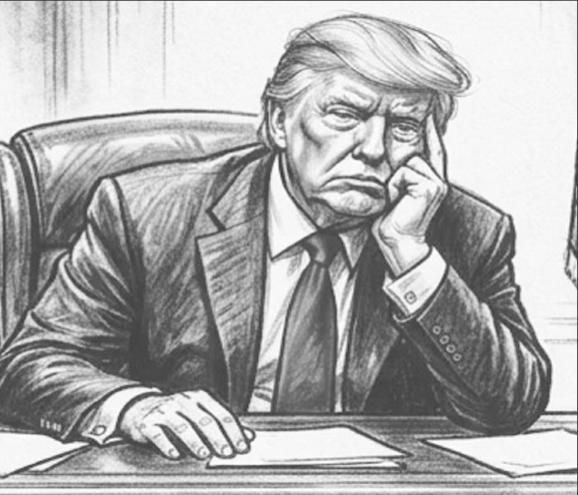
THE recent remarks by United States President Donald Trump that the military conflict against Iran was effectively over marked a stunning reversal in American strategy and a rather profound political embarrassment for a president who entered the war expecting military supremacy to extract strategic submission.
After months of confrontation, enormous economic disruption and ever mounting domestic opposition, Washington seems to be discovering that military superiority could not automatically translate into some sort of political victory. Iran has survived the assault, its governing system remains intact, and the objectives of the American-Israeli campaign remain unfulfilled.
What began as an ambitious attempt to reshape the Middle East has now become a struggle to rescue American credibility while containing the political and economic consequences at home.
On Nov 9, the US president acknowledged that further military action against Iran appeared unnecessary, although American forces remained prepared to resume operations. His announcement did not constitute a formal peace agreement, but it unmistakably signalled Washington’s retreat from the expectation that additional military force would produce the desired political outcome.
However, Washington is shifting the battlefield from military installations to Iran’s economic foundations. Iran’s energy exports have become the principal target. The expectation appears to be that economic hardship will generate domestic unrest and eventually accomplish the regime change that military intervention could not deliver. Washington may hope that economic suffering will translate into political rebellion, but Iran’s continued institutional survival demonstrates that such calculations cannot guarantee the desired outcome.
The political repercussions are equally visible in Israel. Benjamin Netanyahu’s coalition did lose its parliamentary majority in recent elections. Across the Atlantic, the American electorate delivered its own verdict during the midterm elections.
The transfer of congressional power really threatens an uncomfortable period of investigations, oversight hearings and intensified scrutiny of the administration’s decisions, military expenditures and some allegations of misconduct.
For Trump, the greatest challenges are no longer confined to distant battlefields. They exist within his own cities where families are having to make difficult choices regarding food, healthcare, housing and debt repayment. The persistence of such hardship amid extraordinary national wealth demands structural reforms rather than political rhetoric. An additional challenge is emerging internationally. The dollar’s reserve-currency status is under a serious long-term threat.
The lesson from the Iran misadventure extends far beyond the Middle East. A nation cannot indefinitely substitute military expenditure for domestic investment, or financial privilege for productive competitiveness, or corporate enrichment for social prosperity. Trump now faces a historic choice: continue pursuing coercive policies abroad while economic inequalities deepen at home, or undertake the fundamental restructuring necessary to restore prosperity to working Americans.
Iran has truly exposed the limitations of American military power. The midterm elections have exposed the limitations of Trump’s political authority. America’s widening economic divisions actually expose something potentially a lot more consequential: the vulnerability of a system that increasingly concentrates wealth among those who control capital while millions who create and sustain that wealth struggle to survive.
Unless the US administration redirects its priorities from foreign confrontation towards domestic reconstruction, fairer economic distribution and productive investment, the decline it fears abroad may ultimately be accelerated by the injustices it refuses to confront at home.
Qamar Bashir
Islamabad