
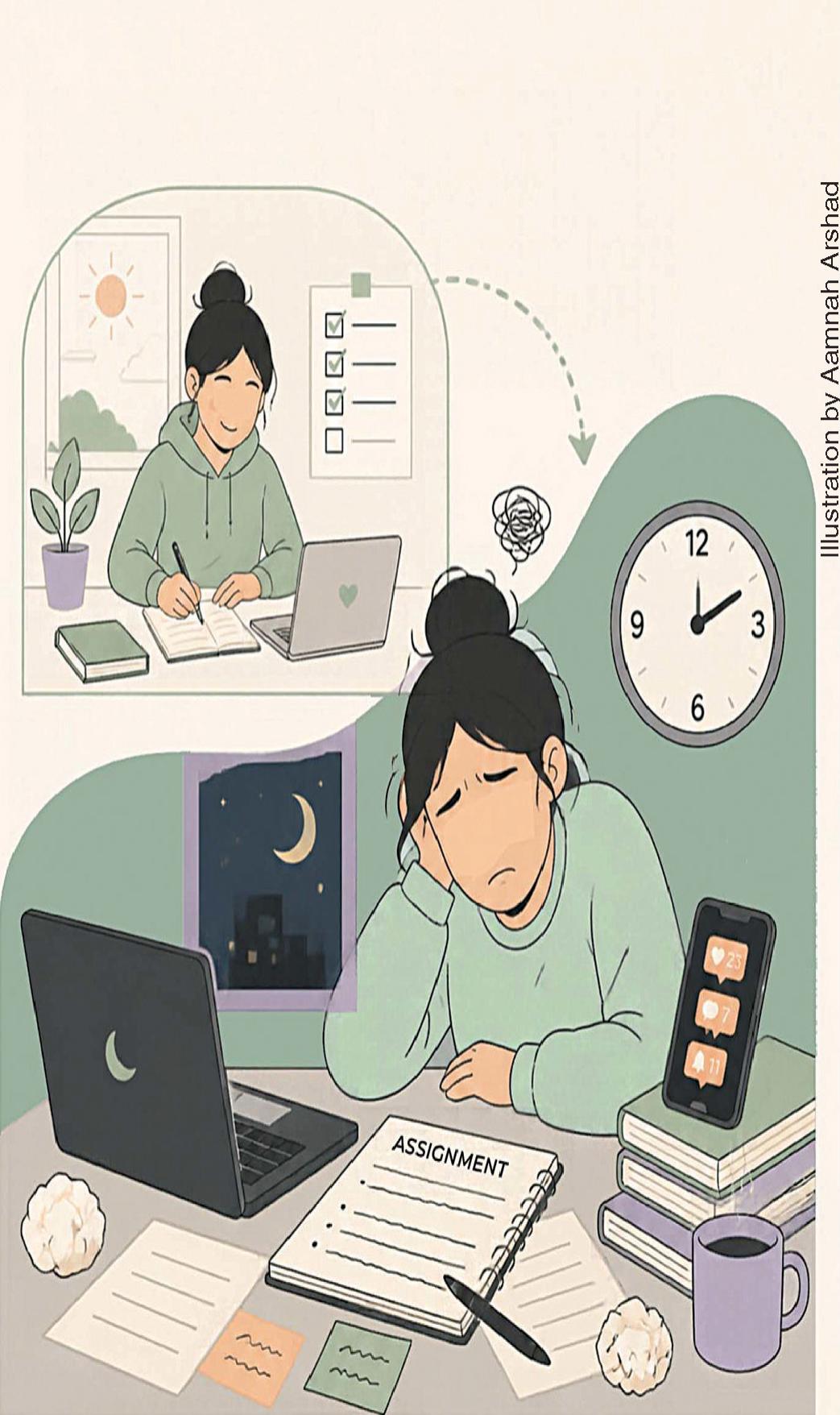
A few days ago, I had an assignment to complete, and it was due the next day. Still, I felt unmotivated and reluctant to make the effort, so I made the universal excuse: ‘I’ll do it later.’
And, as we all know, when I finally got started, it took almost the whole night. I went to bed after 2 a.m., which left me feeling drowsy at school the next day.
As I struggled through the day, a question popped into my mind: why had I chosen to leave the assignment until the last minute when I had time to do it earlier? Why had I procrastinated?
Why do we procrastinate?
If you think you never procrastinate, think again. Most of us do it, sometimes without even realising it. It can become such a regular habit that we hardly notice when we’re doing it. For instance, when we settle into something comfortable, like scrolling on our phones or hanging out with friends, we feel so engrossed and happy that other tasks no longer seem interesting or urgent. We tell ourselves that everything can wait.
In simpler words, procrastination is delaying a task instead of doing it when we should. Sometimes, we put things off for days because we’d rather do something more entertaining. I’m not saying we shouldn’t have fun. I’m just saying we should try to finish important tasks first and then enjoy our free time without feeling guilty. After all, it’s much easier to relax when we know there’s nothing important waiting to be done.
Another reason we procrastinate is that we often underestimate how long a task will take. We think we have plenty of time, only to realise that the deadline is approaching. Then we scramble to finish the work, sometimes discovering that it takes much longer than we expected. Because of the lack of time, we may not do as well as we could have, even when we are quite capable of excelling at the task. This can be particularly frustrating because we end up blaming ourselves for a result that might have been much better if we’d simply started earlier.
When does ‘later’ become too late?
We tell ourselves, ‘Oh, the assignment is due next week, so I have plenty of time.’ Then a day passes, and another, but we still don’t feel ready to sit down and research or work on it properly. Before we know it, the deadline is the next day, and we’re rushing to get it done.
A task, whether big or small, can become stressful if we leave it until the last minute. And I’m not just talking about assignments; I’m also talking about important opportunities. For instance, imagine a competition I really wanted to enter. If I kept putting off my application, I might discover that entries had closed or all the available places had been filled. I would have missed an opportunity that could have benefited me simply because I hadn’t made the effort in time.
And unlike an assignment, which might sometimes be completed late, certain opportunities don’t come around again. This is why delaying things can sometimes cost us more than just a few hours of sleep!
What distracts us?
It is natural to be drawn towards things that interest us rather than tasks we find less exciting. We are more likely to keep doing something that gives us immediate enjoyment than start a task whose results we may not see until much later.
And in this age of social media, messages and notifications can grab our attention instantly. The moment we pick up our phones, we can end up wasting hours without even realising it. We might open an app just to check one message and then find ourselves scrolling through videos, posts and updates. Before we know it, the time we had set aside for our work is gone.
Is procrastination really laziness?
Not really. Laziness is about being unwilling to make an effort, while procrastination is about delaying a task even when you intend to do it.
For example, a lazy student may have homework to do but choose not to make the effort.
A student who procrastinates, on the other hand, wants to finish their homework but keeps putting it off to watch videos, check messages or do other things. They may even feel guilty about not getting started.
The two can overlap, but they are not the same. A person who procrastinates may be avoiding a difficult task, feeling anxious about getting it wrong, struggling to concentrate or simply finding other activities more tempting. Sometimes, we put things off because we don’t know where to begin or feel overwhelmed by how much there is to do. In such cases, the problem isn’t that we don’t want to work; it’s that getting started feels harder than it should.
Why do we become super productive at the last minute?
When a deadline seems far away, we tend to think we have plenty of time. Unfortunately, time passes quickly and when we finally sit down to start, our brain suddenly finds other things to do.
We get distracted by thoughts such as, ‘Oh, look at your desk! It’s so messy. Let’s clean it up first!’ Or we find ourselves doing all sorts of random, unimportant things. Anything seems more appealing than the task we are supposed to be doing!
But as the deadline gets closer, the pressure builds. The task we kept avoiding suddenly becomes our top priority and we rush to finish it. Sometimes, the fear of missing a deadline is what finally gets us moving. The urgency gives us a push, but working under pressure isn’t always a good thing. We may finish the task, but at the cost of our sleep, peace of mind and sometimes the quality of our work.
Can we break the ‘I’ll do it later’ habit?
We absolutely can and it starts with small steps. First, when you catch yourself saying, ‘I’ll do it later,’ try the five-second rule. Count down from five and then immediately put aside your distractions and begin the task. The idea is to act before you give yourself time to come up with another excuse. It may not work every time, but it can help you get started.
The two-minute rule can also help. If a task takes two minutes or less, do it straight away. Otherwise, these little tasks can pile up and take up space in your mind, making it harder to focus on other things. Completing them immediately also gives us a sense of accomplishment, which can make it easier to tackle bigger tasks.
Setting unrealistic goals, such as studying for 12 hours a day or working out seven times a week, can also set us up for failure. Such goals may sound impressive, but they can be difficult to maintain, especially when we’re just starting out.
Instead, break big, complicated goals or tasks into smaller, manageable ones. For instance, rather than saying, ‘I want to learn a new language,’ tell yourself, ‘I’ll learn five words a day.’ A small target is easier to achieve, and once we get into the habit, we can gradually do more.
And once you complete a task, reward yourself with something you enjoy or take a ten-minute break. This can help you associate getting things done with a positive feeling. Just don’t pick up your phone, because we all know where that train leads!
You don’t have to finish everything in one go or become super productive overnight. Just start somewhere, keep going and give yourself enough time to do things properly. After all, the best time to get something done is usually before it becomes urgent.
Remember, small steps taken consistently will get you further than big plans you never start.