
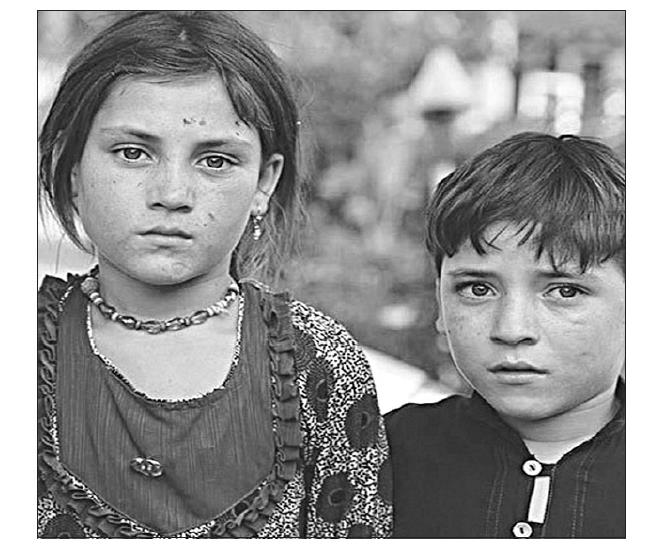
I WAS a child when on September 11, 2001, a man known for his passion for radio news broadcasts, especially the British Broadcasting Corporation (BBC), ran through the narrow streets clutching his radio and announcing that the United States had been attacked and hundreds of people had been killed. At the time, watching television was discouraged by some elements, and families who violated the prohibition could face social boycott.
Yet, we did own a TV set, and on that night, we secretly turned it on and adjusted the rooftop antenna until the images became clear. As a child, I struggled to grasp the enormity of the events.
I asked my elder brother what it was all about, and, among the many things he said, my young mind retained one specific thing; the events marked the beginning of a Western war against the Muslim world, he had said in an apprehensive tone.
The following day at both school and the seminary, however, teachers took a different view. I could not distinguish between political violence, religion and international conflict. For me, something extraordinary had happened and many adults around me viewed it as a source of pride. Later in the day, my uncle tried to address my curiosity, and in that conversation I heard for the first time the term ‘terrorist’. That little chat prompted my early interest in understanding why individuals and societies become vulnerable to violentideologies.
Global debates aside, the consequences of the events for Waziristan were not merely conceptual as the region had already been shaped by decades of geopolitical intervention, religious mobilisation, weak governance, economic deprivation and, indeed, the Afghan war which had left behind not only weapons, but also a social andideologicalinfrastructure thatlater facilitated militancy.
The infamous Kalashnikov gradually acquired symbolic value in parts of tribal society in which militant narratives as well as religious symbolism, with the passage of time, became increasingly popular andvisible. The process of radicalisation was not produced by a single factor. Political mobilisation, poverty, displacement, weak educationalinstitutions,unemployment, foreignintervention andideological propaganda interacted with one another.
The subsequent emergence of organised Taliban groups in Mir Ali, Miranshah, Razmak and surrounding areas introduced a brand new model of authority and identity.
Armed men, distinctive clothing, disciplined hierarchies and religious rhetoric created an image of power that attracted young people to the extent that some school-age boys entered training camps without their families’ knowledge.
Traditional institutions, such as the Malik system and hujra, were unable to respond effectively to the rapidly changing environment. Many influential families relocated to urban centres,leavinglocal communities increasingly vulnerable to militant authority.
The history of Waziristan demonstrates how violence can become normalised.
The people of Waziristan ultimately paid an extraordinary price. Wazirs, Dawars, Mehsuds and other communities lost family members, homes, educational opportunities, politicalleaders,intellectuals and social institutions. From the mountains of South Waziristan to the Tochi Valley, the consequences of prolonged conflict reshaped everydaylife.
The story of my childhood encounter with the early 9/11 images represents more than a personal memory. It illustrates how global events can enter the consciousness of children in remote communities and acquire meanings that shape an entire generation. Understanding this process is essentialto understanding the later struggle between extremism and the indigenous social fabric of Waziristan.
Tufail Dawar North Waziristan