
Leaders of Jeay Sindh Rahbar Committee term Urdu-speaking people integral part of Sindh’s collective identity
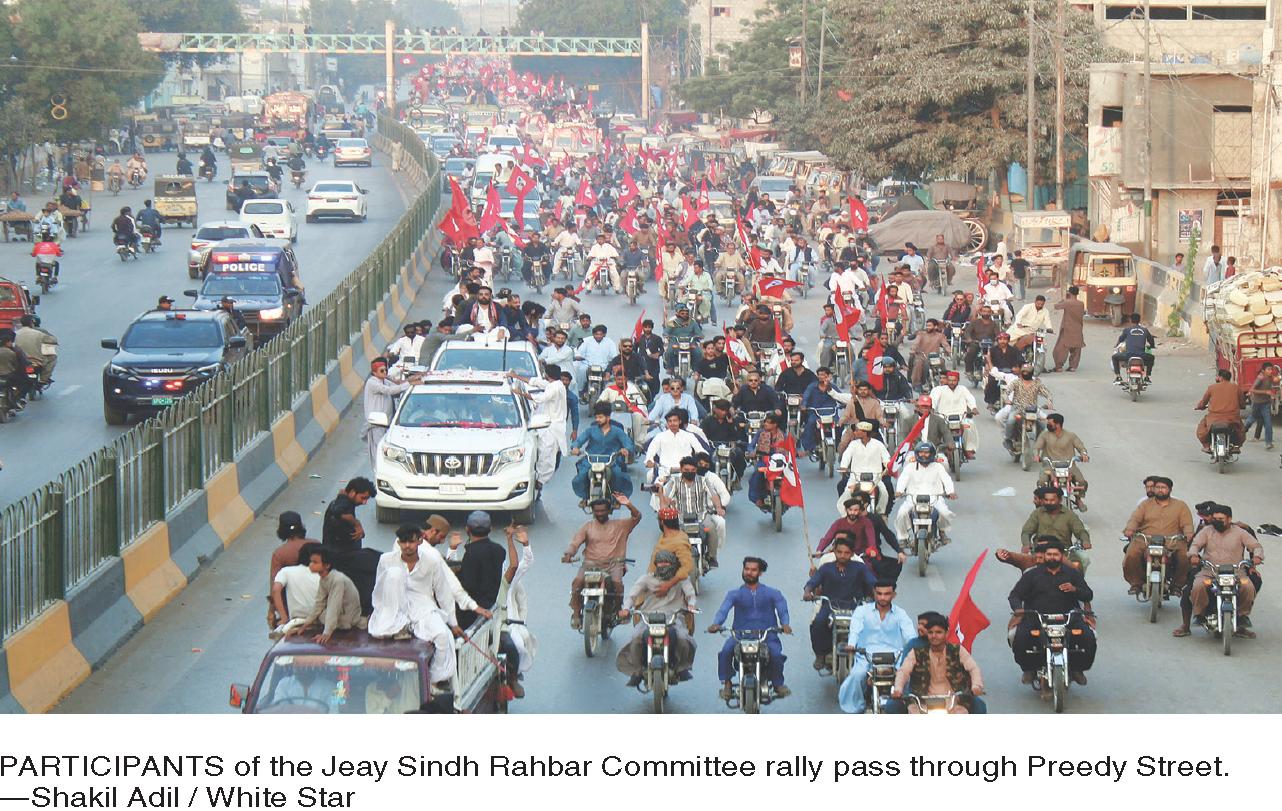
KARACHI: A large number of people from across Sindh took to the streets of Karachi on Sunday in a rally organised by the Jeay Sindh Rahbar Committee (JSRC), an alliance of four nationalist parties, to protest against any plan for the creation of new provinces or administrative units in Sindh.
The participants marched through various parts of the city, starting from the Sachal area and passing through Gulistan-i-Jauhar and Sharea Faisal before culminating at Fawara Chowk, where their leaders addressed the rally.
The demonstration was led by nationalist leaders, including Dr Niaz Kalani and Riaz Chandio, along with other leaders of the JSRC constituent parties. Lawyers and representatives of various sections of society also joined the protest. Prominent among them were lawyers’ leaders Aamir Nawaz Warraich, Haseeb Jamali and K.B. Laghari.
Carrying banners and chanting slogans, the protesters rejected any move to divide Sindh or establish new provinces and administrative units, calling for the preservation of the province’s historical, geographical and cultural unity.
Addressing the gathering, the speakers said there could be no compromise on Sindh’s unity, declaring that Sindh was one, remained one and would continue to remain one.
They described the province as their motherland and said its people would never accept any attempt to divide it.
They said Sindh’s historical unity was not merely an administrative issue but was deeply connected with its thousands of years of history, civilisation, culture and collective identity.
They urged the federal government and relevant institutions to respect the sentiments and wishes of the people of Sindh and refrain from decisions that could trigger political and social unrest in the province.
The nationalist leaders also stressed that their movement was not directed against any ethnic, linguistic or religious community.
They said they respected Urdu-speaking people and all other linguistic, religious and ethnic communities living in Sindh, describing them as an integral part of the province’s collective identity.
The speakers accused ‘certain political elements’ of exploiting ethnic sentiments for political gains and attempting to disturb Sindh’s peaceful social fabric.
The speakers also rejected a proposed public referendum on the creation of new provinces and administrative units, arguing that public opinion should not be used to legitimise a predetermined political or administrative agenda.