
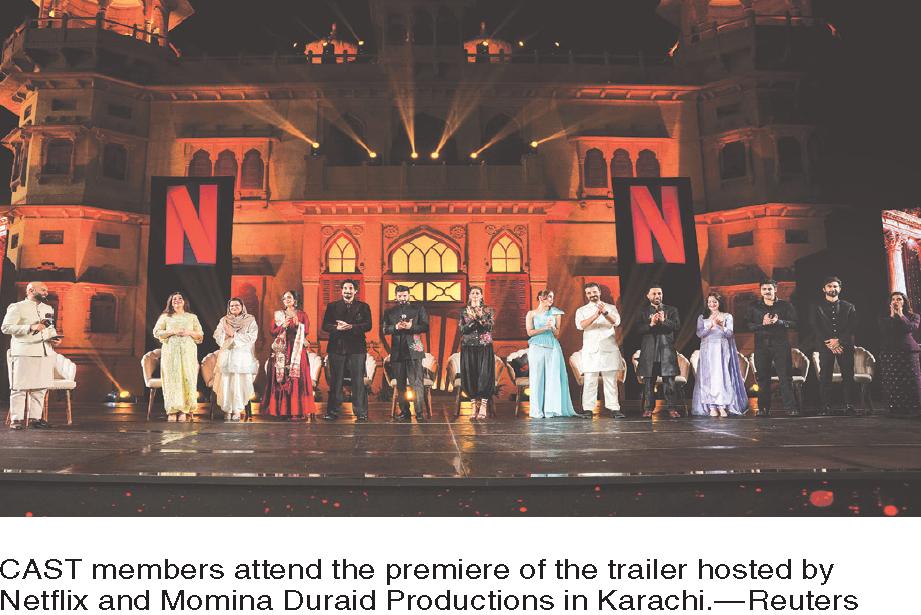
ISLAMABAD: After controversial attempts to politicise sports by prohibiting cricketers from travelling to Pakistan, India has threatened global streaming giant, Netflix, against the release of much-awaited Pakistani series Jo Bachay Hain Sang Samait Lo as the All Indian Cine Workers Association (AICWA) planned protests outside Netflix offices and a subscription cancellation campaign.
Featuring Mahira Khan, Fawad Khan, Sanam Saeed, Hamza Ali Abbasi and other stars with many Indian fans, the series is Pakistan’s first Netflix original. Its global premiere is scheduled for Dec 4.
Interestingly, Fawad Khan, who has worked in Bollywood super hits in the past, has faced two separate blocks on his screen releases in India in recent years as his film Abir Gulaal (Aabeer Gulaal) was previously denied permission to release in India.
Far from a spontaneous reaction, the new threat forms an organised campaign aimed at silencing voices, faces and stories linked to Pakistan, driven by growing anxiety in Indian media over Pakistani content winning over viewers.
Prime Minister Modi’s government has asked the global streaming giant not to air the Urdu-language series, Indian media reported. According to ANI, Indian government sources said Netflix had been asked to honour its 2025 stance that it made no Pakistani content available in India.
The pressure targets a lucrative market where Netflix boasts an estimated 20 million users, according to HSBC.
Netflix India earned revenue of approximately $405.44 million and a net profit of $9.14m in FY25, a 63pc jump from the previous year, while its Indian production unit posted revenue of around $452.55m with profit doubling to $19.47 million. Holding hostage a platform generating billions over a single drama amounts to commercial blackmail rather than legitimate competition, analysts said.
Netflix did not respond to a request for comment.
As Pakistani dramas continue to stand out for superior storytelling and acting, New Delhi’s growing unease and pressure reflect the vulnerability of Indian content that is losing appeal domestically.
The latest coercion follows a broader pattern of digital and cultural censorship in India. In 2025, the Modi government banned 16 Pakistani YouTube channels with over 63m subscribers, building on the 2022 shutdown of 35 Pakistani channels. Networks including ARY Digital, Har Pal Geo and Hum TV were subsequently targeted, and the Instagram accounts of more than 20 prominent Pakistani artists were blocked.
Even non-political family dramas such as Parizaad were cast as threats to India’s ‘national security’.
The AICWA has repeatedly used intimidation, labelling Pakistani actors ‘terrorist’ and blocking a film’s Indian release over the mere presence of a Pakistani actress. For decades, Indian prejudice has persisted alongside admiration for Pakistani art. Netflix itself has faced repeated mob pressure in India over IC 814 and Maharaj underscoring a climate where threats replace dialogue.
This pattern unfolds alongside Indian media’s credibility crisis, including its May 2025 embarrassment over fabricated claims such as the ‘destruction of Karachi port’, alongside propaganda films drawing global ridicule.
—Monitoring Desk