
HEART attack is often treated as an unexpected event a tragedy that suddenly interrupts an otherwise normal life. But in many cases, the story of a heart attack begins years earlier, with high blood pressure, diabetes, high cholesterol, smoking, unhealthy eating, physical inactivity and excess weight. The good news is that cardiovascular disease is not inevitable. Prevention can save lives long before a patient reaches the emergency room.
Cardiovascular diseases remain the leading cause of death worldwide.
In Pakistan the situation is even more alarming with the younger population being increasingly affected day by day. According to the Cardiac Registry of Pakistan Catheterisation Percutaneous Coronary Intervention data from 2016 to 2019, 60 per cent of the affected patients were men less than 55 years old and women less than 65 years old. Therefore, it is highly important to understand the risk factors and control them timely to prevent an emergency.
Know your numbers One of the simplest ways to protect your heart is to know your health numbers. Checkyourbloodpressure, blood sugar, cholesterol and weight regularly. High blood pressure and high cholesterol can remain silent for years, gradually damaging the blood vessels without producing obvious symptoms. Early detection provides an opportunity to intervene before serious disease develops.
Move more, sit less Our lifestyles have changed dramatically. Cars, desk jobs, late nightworking, screens and long hours of sittinghave made physicalinactivity increasingly common. Yet the heart is a muscle, and like every muscle, it benefits from regular activity.
Walking, cycling, swimming, jogging or simply incorporating more movement into daily life can make a meaningful difference. For most adults, the goal should be at least 150 minutes of moderate-intensity physical activity each week, along with muscle-strengthening activities on two or more days. You do not need an expensive gym membership to protect your heart. A brisk daily walk can be an excellent beginning.
Food is medicine but prevention starts with everyday choices A heart-healthy diet does not have to be complicated. Eat more vegetables, fruits, whole grains, pulses, nuts and minimally processed foods. Reduce excessive salt, added sugars and unhealthy fats, and limit highly processed foods.
In our own homes, prevention can begin with remarkably simple changes: less salt in cooking, fewer sugary drinks, smaller portions, more vegetables and replacing highly processed snacks with healthier alternatives.
Tobacco: there is no safe shortcut Smoking and other forms of tobacco use significantly increase cardiovascular risk. Quitting is one of the most powerful things a smoker can do for their heart. Importantly, quitting is beneficial at any age even for people who have smoked for many years. Professional counselling and appropriate treatment can substantially improve the chances of successfully quitting.Prevention is more than an individual’s responsibility While personal choices matter, prevention cannot depend entirely on individuals. Communities need safe spaces for walking and cycling, access to affordable healthy food, smoke-free environments and opportunities to participate in physical activity. Hospitals and healthcare institutions also have a responsibility that extends beyond treating disease.
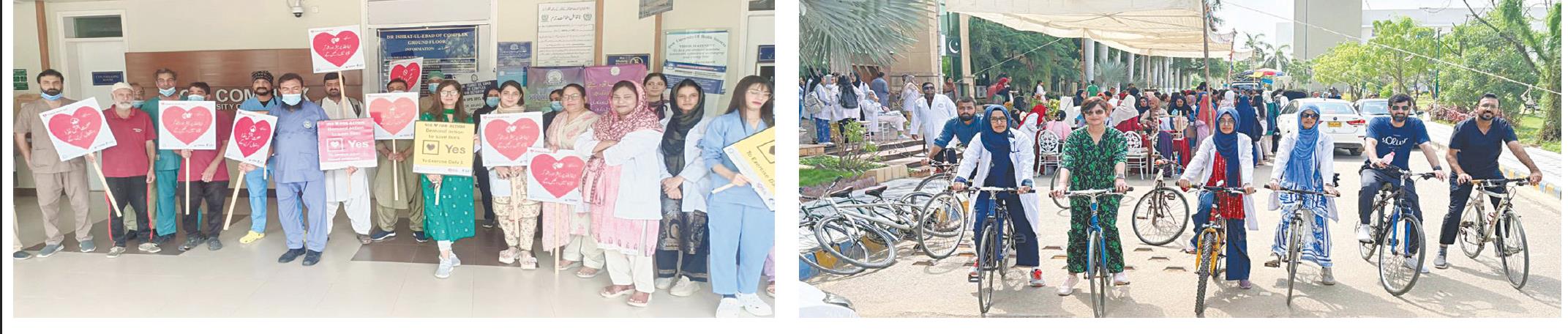
Taking prevention into the community through Gen-Z At the Dow Institute of Cardiology (DIC), prevention and awareness are increasingly being incorporated into our community activities through Gen-Z. Rather than waiting for patients to develop advanced cardiovascular disease, initiatives such as public awareness walks and free cardiovascular screening camps on World Heart Day provide opportunities to educate people andidentify important risk factors early.
We engage students in activities such as bikeathons which carry an equally important message through Gen-Z: heart health is not only about medicines and procedures it is also about movement, healthy habits and an active lifestyle from the early adulthood. These initiatives are particularly important because message of prevention becomes more powerful when it reaches to masses through students where they live, work and spend their daily lives.
The goal should be fewer heart attacks not simply better treatment of heart attacks Modern cardiology has made extraordinary advances. At DIC we can open blocked arteries, implant stents, replace diseased valves and support patients through life-threatening cardiac illness. But the greatest success in cardiology would be to prevent people from developing these problems in the first place.Every blood pressure checked, every smoker who quits, every person who starts walking, every kilogram of excess weight lost and every case of diabetes or high cholesterol detected early represents a step towards reducing the cardiovascular burden.
The success story of Dow Institute of Cardiology The evolution of modern cardiology in Pakistan reflects a broader commitment to accessible, high-quality healthcare. Within this landscape, the DIC, a constituent institute of Dow University of Health Sciences (DUHS), has emerged as a dynamic and rapidly advancing centre of excellence. Since its inauguration in January 2016, DIC has not only expanded the scope of cardiac services in the public sector but has also set new benchmarks in clinical care, academic training, and technological innovation.
Foundation and vision The establishment of DIC was rooted in the broader vision of DUHS: to create a pre-eminent healthcare institution capable of transforming and saving lives. From its inception, the institute was designed to address the growing burden of cardiovascular disease in Pakistan an epidemiological challenge requiring both preventive strategies and advanced interventional care.
Positioned as the third largest public cardiac centre in the city of Karachi, DIC was envisioned as a comprehensive facility capable ofdelivering end-to-end cardiac care, spanning prevention, early diagnosis, acute intervention, and longterm management. A defining feature of DIC is its commitment to providing a continuum of cardiac care, from prevention to intervention.
The journey of the DIC exemplifies how strategic vision, institutional commitment, and clinical excellence can converge to create a transformative healthcare model.
From its inauguration in 2016 to its current status as a rapidly growing centre of excellence, DIC has: Established comprehensive cardiac services Achieved prestigious academic accreditations Integrated advanced technologies Maintained affordability for the general population In less than a decade, the DIC has carved a distinct identity within Pakistan’s healthcare system. Its success lies not only in numbers or infrastructure but in its holistic approach to cardiac care spanning prevention, diagnosis, intervention, and education.
Guided by the vision of DUHS, the institute continues to move towards becoming a pre-eminent centre of cardiology, dedicated to changing and saving lives. As cardiovascular disease continues to pose a major public health challenge, institutions like DIC offer a compelling blueprint for the future where excellence, accessibility, and innovation coexist seamlessly.