
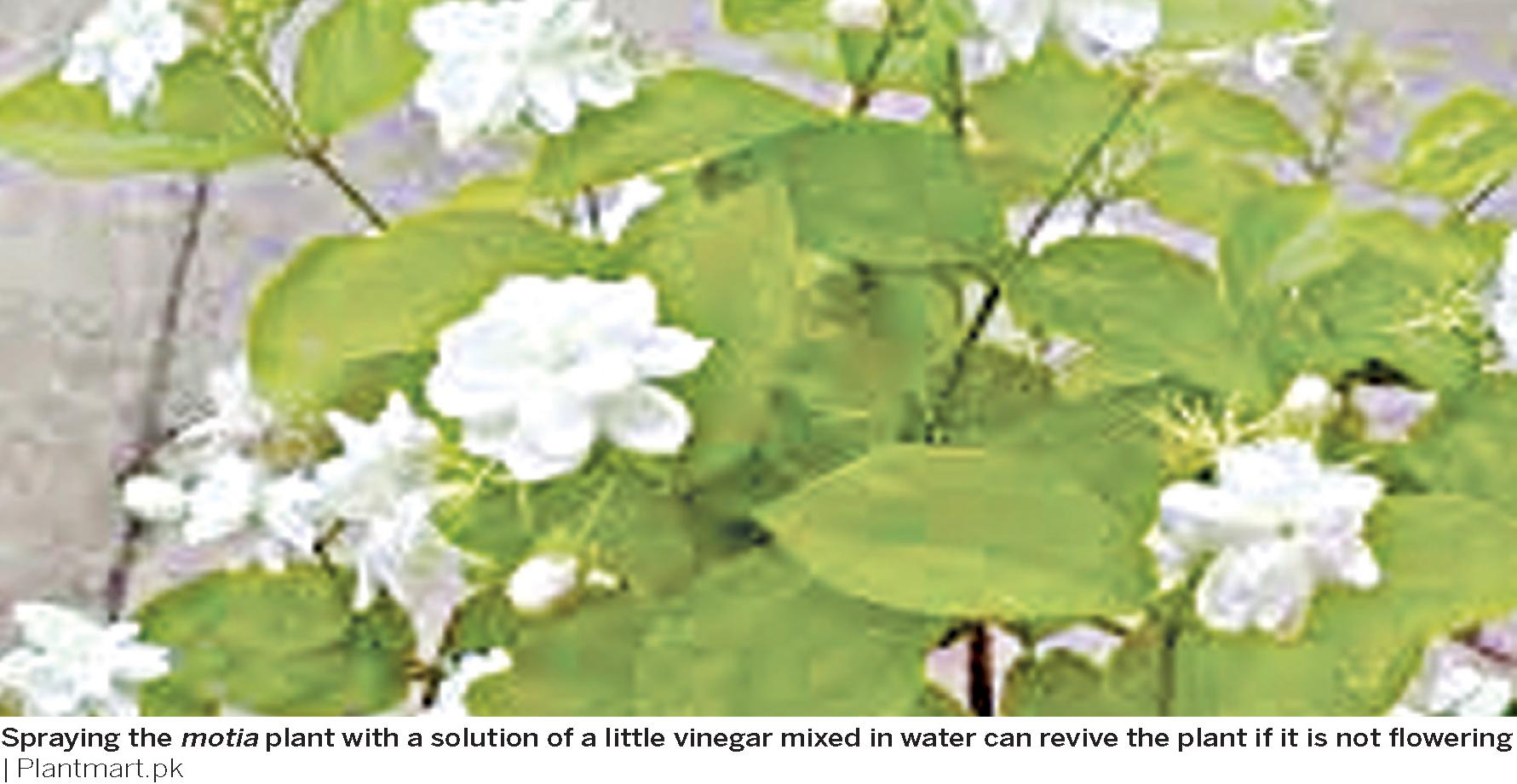
Q. I have a few motia [Arabian jasmine] plants at home in Karachi. Some are in pots, while others are planted in a flower bed. They receive adequate sunlight and water. There isn’t any sign of a pest attack. But my plants are not flowering. Only two of the plants have flowered, and even their bloom has been disappointing. Even the leaves appear lifeless. Is there a quick-fix remedy that I can try?
A. I would suggest mixing a tablespoon of household vinegar in a litre of water and spraying the solution on the plants. I have seen many jasmine plants recover and produce large flowers after this treatment. Vinegar is said to increase soil acidity, while motia generally thrives in slightly acidic soil. Hopefully, the leaves will regain their colour and suppleness, and the plants will produce the blooms you are hoping for.
Q. I have a few lemon plants in pots, along with some herbs and flower plants. All my plants have been infested with pests, which I have been removing manually for over a month. Someone told me they might be aphids. What would you recommend? I live in Karachi.
A. Based on the photographs that you have shared, your plant appears to be infested with mealybugs rather than aphids. Since some of your plants are edible, I would recommend trying an organic remedy first. Add one tablespoon of vinegar and a few drops of dishwashing liquid in a litre of water. Spray the solution on the affected parts of the plant. Pay particular attention to the area where mealybugs are visible. Chemical pesticides are another option, though I would not recommend using them. If you do use a chemical pesticide, follow the application instructions on its label.
Q. I am from Mirpurkhas, around 300 kilometres east of Karachi. Back in 2008, I planted a coconut sapling in a container. Once it had grown a little, I transplanted it into the ground. It has since grown to a height of 20 feet. However, it only began fruiting two months ago. Last month, I noticed yellow flower stalks emerging from the sides of the tree, but they have remained the same size. I have attached a photograph for reference.
I also noticed a walnut-sized fruit fall from the tree, but did not photograph it. Please advise me on how to care for the tree better.
A. Congratulations on seeing your coconut tree bear fruit 18 years after you planted it. The structures you have described are coconut inflorescences, commonly known as flower stalks. Both male and female flowers develop on these inflorescences. The inflorescences eventually open, exposing the flowers. The premature dropping of young fruits, known as button shedding, is also not unusual. This can happen for several reasons, including poor pollination, nutrient deficiencies, temperature fluctuations and water stress. I would recommend applying a potassium-based fertiliser during this phase. Regular watering, along with proper drainage, is also essential. Hopefully, your tree will continue to bear fruit over the next few months.
Q. I live in Karachi and have a hybrid papaya plant at home. I planted it about 18 months ago. The plant is now bearing fruit, but the young fruits fall off before reaching full size or ripening. I regularly apply the NPK [nitrogen, phosphorus and potassium] fertiliser.
A. Hybrid papaya plants usually live for four to five years. Heavy fruiting can further shorten the plant’s lifespan. The combination of heavy fruiting and a shorter lifespan is common among papaya plants in Karachi. Photographs of your plant would have been helpful in diagnosing the problem.
If the plant is not suffering from any pest infestation, inadequate watering may be contributing to the problem. Papaya plants that do not receive proper care during their early growth stages, including transplantation, may also develop this problem.
Please send your queries and emails to doctree101@hotmail.com. The writer is a physician and a host for the YouTube channel ‘DocTree Gardening’ promoting organic kitchen gardening