
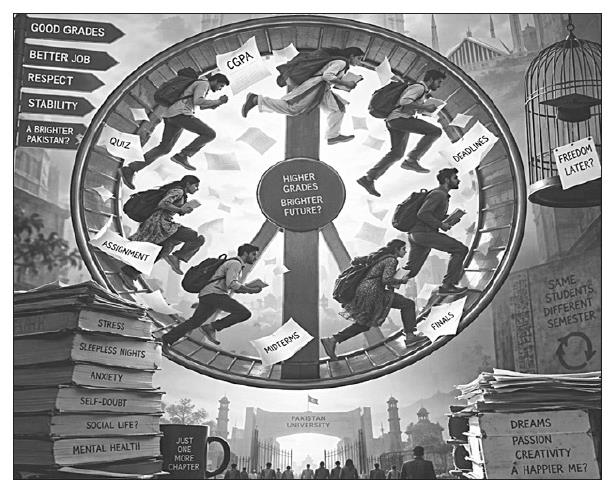
THE greatest demerit of the education system in Pakistan is its obsession with previous academic records. Whether a student applies for medical college, an undergraduate programme, a master’s degree, or an MPhil, merit calculations continue to be influenced by grades obtained in earlier years. This approach fails to recognise that students evolve, learn and improve over time.
The consequences of this policy are quite visible in Medical and Dental College Admissions Test (MDCAT) every year.
Thousands of students spend months in preparing for the examination, believing that their performance in the entrance test will determine their future. However, many candidates who achieve competitive MDCAT scores are unable to secure admission because matriculation and intermediate grades constitute a significant portion of the overall merit formula.
Performance in the examination hall is often outweighed by grades obtained years earlier.In every sphere ofhighereducation, admission criteria should be determined primarily by aptitude test performance and interview assessment rather than previous grades. An aptitude test evaluates a candidate’s current knowledge, analytical ability and readiness for a particular field of study. It measures what a student knows today, not what they scored years ago.
The current system punishes students indefinitely for past setbacks, financial hardships, family responsibilities or educational disadvantages. A student who proves competence in a competitive entrance examination should not be overshadowed by academic records from the distant past. Students mature intellectually, acquire new skills, and overcome personal and financial obstacles over time. An aptitude test is specifically designed to evaluate a candidate’s current knowledge and potential. Therefore, admissions should only be based on aptitude test performance.
SumeraMahar Shikarpur