
Aakash Jivraj paints the human figure to probe the pressures of conformity and the compromises people make to find acceptance.
The young Karachi-based artist, who graduated in 2024 from the School of Visual and Performing Arts at the Arts Council of Pakistan, Karachi, approaches these concerns in his solo exhibition ‘The Silent Tutor’ at the Sanat Initiative through figurative paintings that combine recognisable imagery with disconcerting, often absurd juxtapositions.
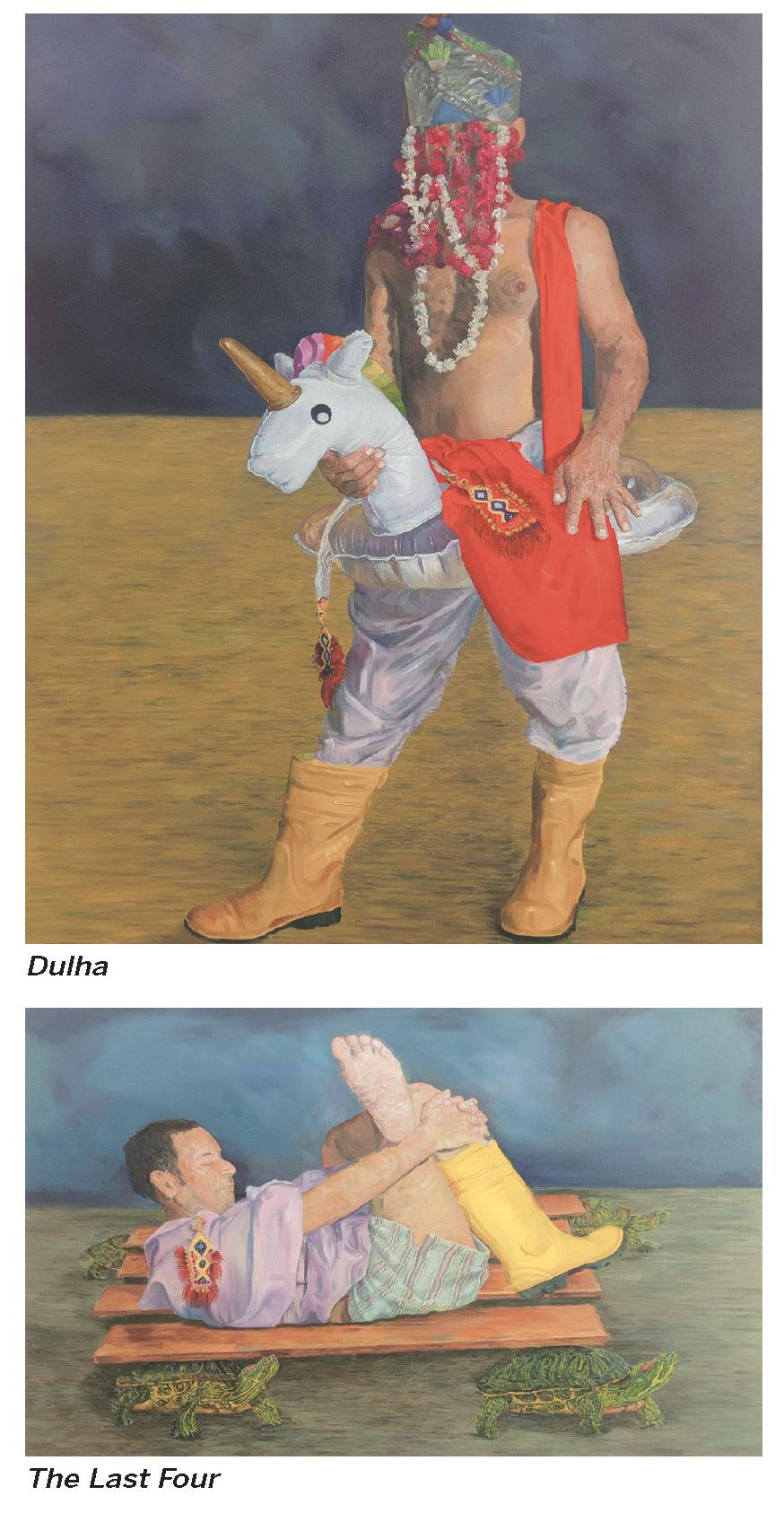
A diptych, titled separately as Dulha and Bhola, introduces an elaborate visual vocabulary. Bare-chested figures, their faces concealed by the sehra [flower-laden headgear worn by bridegrooms], stand against dark, indistinct backgrounds.
They wear bright yellow Wellington boots and ‘ride’ inflatable toy unicorns, while one also carries fodder.
The unexpected conjunction of ceremonial-looking adornment, mundane clothing and children’s playthings creates an atmosphere at once theatrical and troubling. The unicorn, a symbol of fantasy, seems particularly apt in a world where appearances can obscure reality. The figures are dressed up, yet their identities remain inaccessible. Their elaborate coverings suggest the performance of roles imposed by tradition, social expectation or the desire to belong.
In The Last Four, a man reclines on wooden slats (held aloft by turtles), holding up his legs while also wearing an incongruously bright yellow Wellington boot on one foot. As in other works in the exhibition, Jivraj employs a naturalistic approach to render an improbable situation with studied conviction. The boot, in particular, becomes a visual interruption, its exaggerated colour and scale drawing attention to the precarious relationship between the body and its surroundings.
Jivraj places his metaphors squarely before the viewer.
Yet, the incongruity of his images gives them a certain psychosomatic control. The figures appear suspended between vulnerability and audacity, distinctiveness and regularity. Their exposed bodies contrast with their concealed faces, suggesting that physical visibility does not necessarily translate into self-revelation. We may see the body, but the person remains elusive. The paintings are carefully constructed, with controlled compositions and a primarily restrained palette punctuated by distinctly vivid items.
One of the more enigmatic paintings depicts a man holding a fish by its tail while cradling a baby in his other arm. Although it is titled Swan’s Fish, it is a heron, with outstretched wings, which appears to be taking flight in the painting. Against the muted olive-green setting, the incongruous conjunction of figures and objects lends the scene an unsettling, almost dreamlike quality.
The critical question is whether this symbolism develops into a sustained exploration of the human condition or remains primarily an intriguing visual puzzle. Jivraj’s representational technique lends credibility to scenes that might otherwise tip into caricature. At the same time, the theatrical staging occasionally makes the symbolism feel more declared than discovered. The works are strongest when their peculiar groupings of objects and gesticulations allow multiple interpretations to coexist, rather than directing the viewer towards a single reading.
The exhibition’s title invites further reflection. What, precisely, teaches us to conform? Family, community, institutions and inherited social codes exert their influence without always announcing themselves. Their lessons are absorbed gradually, until the performance of an acceptable identity becomes almost instinctive.Jivraj’s figures seem caught within this process, dressed for roles they may not entirely understand. For a young artist, these paintings demonstrate a promising willingness to confront the uneasy relationship between outward appearance and inner life. Jivraj’s challenge now is to deepen the relationship between his symbols and the lived complexities they represent, allowing paint, gesture and ambiguity to carry as much weight as the conceptual premise.
A mask in his paintings is a tool for both concealment and revelation. What it hides may be a face and what it reveals is the persistent human struggle to belong without losing oneself. Yet, the symbolism remains open-ended and whether this ambiguity deepens the work or leaves it hovering between allegory and anecdote is a question the viewer must resolve.
‘The Silent Tutor’ was on display at the Sanat Initiative in Karachi from October 6-15, 2026 Rumana Husain is a writer, artist and educator. She is the author of two coffee-table books on Karachi, and has authored and illustrated 90 children’s books