
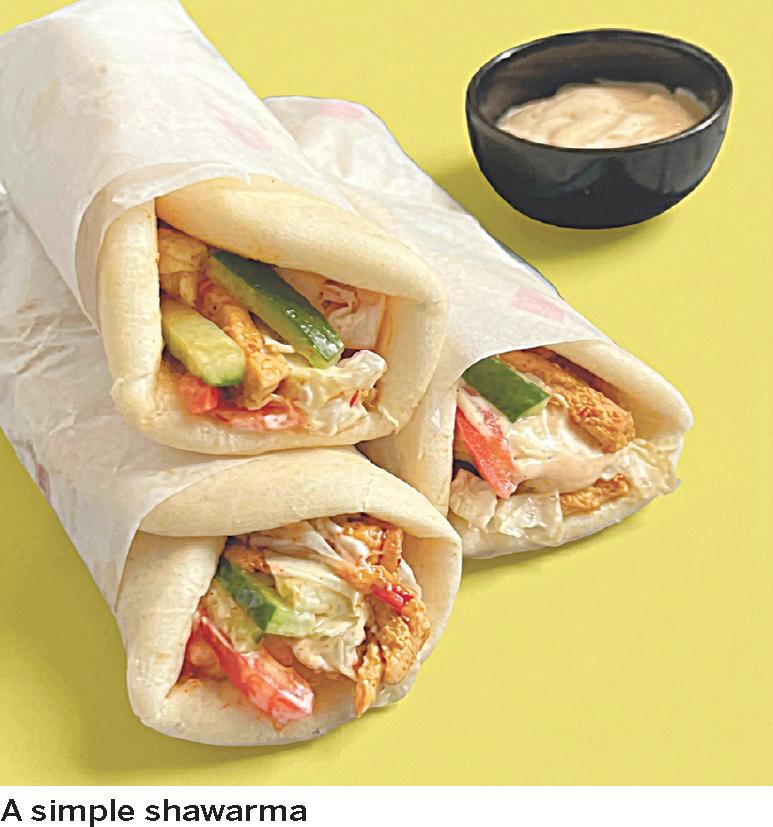
At first glance, shawarma, döner kebap and gyros may look much the same. But these popular street foods have distinct culinary traditions, ingredients and methods of preparation, each reflecting the culture from which it has emerged.
In Pakistan, shawarma is the most familiar of the three. It typically consists of thinly sliced meat — mutton, beef or chicken — marinated in a blend of spices and cooked on a vertical rotating spit. The meat is shaved off as it cooks and served in pita bread with salad, pickles and sauces. It is a popular, portable street food.
Shawarma is not indigenous to Pakistan. It evolved from the Ottoman Turkish döner kebap [turning grilled meat], with the word deriving from the Turkish çevirme, also meaning ‘turning’. The meat is marinated, stacked in layers on a vertical spit and slowly rotated as it cooks. This produces tender, flavourful meat with crisp edges.
Today, shawarma is particularly popular across the Middle East, where it has developed its own regional variations. Although its roots lie in the Turkish döner kebap, the dish has evolved considerably as it spread through the Levant.
Lebanese immigrants introduced the vertical-spit method of cooking meat to Mexico in the early 20th century. Over time, it evolved into tacos al pastor, a popular Mexican street food in which marinated pork is shaved off a rotating spit and served in small corn tortillas, often with pineapple, onions and coriander.
In Greece, a similar preparation is known as gyros, in which seasoned meat is stacked on a vertical spit and slowly roasted before being shaved off and served, usually in pita bread. Another popular Greek street food is souvlaki, which consists of pieces of meat grilled on skewers and often served with pita, salad and sauces.
I have enjoyed shawarma and its many variations in different places, including at a roadside cafeteria in Glasgow. Each had its own distinct flavour, shaped by the meat, marinades, spices and sauces used.
In the Middle East, tahini sauce, often blended with garlic and lemon juice, lends shawarma its distinctive flavour. Greek gyros, meanwhile, are commonly accompanied by tzatziki, a refreshing sauce made with yoghurt, cucumber, garlic, lemon juice and herbs such as dill and mint.
It is challenging to recreate these street foods at home, particularly because most kitchens do not have a vertical rotating spit. But there are simpler ways to achieve similar flavours and textures. Here are my versions of shawarma, döner kebap and pita bread.
HOME-MADE SHAWARMA
For the meat, take two chicken thighs, which should remain soft and juicy when cooked. Remove the bones and skin, and slice the meat thinly. If necessary, gently flatten the slices with a meat mallet to ensure even thickness.
Marinate the chicken with one teaspoon each of white vinegar and soy sauce, four tablespoons of yoghurt, one teaspoon of a ginger-garlic paste, a quarter teaspoon of salt and black pepper. Cover and refrigerate for an hour.
Meanwhile, cut a medium-sized carrot and cucumber into thin julienne strips. Toss them with two tablespoons of white vinegar and a pinch of salt. Set aside to pickle lightly.
To prepare the white sauce, take three garlic cloves, one teaspoon of white vinegar, one egg, a quarter teaspoon each of salt and black pepper, and a teaspoon of sugar. Blend until smooth. With the blender running, gradually drizzle in half a cup of any cooking oil until the mixture thickens into a mayonnaise-like sauce.
For the red sauce, soak a handful of dried Kashmiri red chillies in hot water until softened. Drain and blend them with two tablespoons of white vinegar until smooth.
Heat a little cooking oil in a frying pan over medium-high heat. Add the marinated chicken slices and cook until browned and cooked through, turning as necessary.
Remove the chicken from the pan and lightly toast the pita bread in the remaining oil, if any. I usually get the pita from the store.
Cut the cooked chicken into smaller strips. Spread the red and white sauces generously over the toasted pita bread, add the chicken and top with the pickled carrot and cucumber. Roll up and serve.
HOME-MADE DÖNER KEBAP
You can also recreate some of the flavours and textures of döner kebap at home, without needing a rotating spit. Take half a kilogramme of ground beef, add to it one medium-sized crushed onion, a teaspoon of salt and half a teaspoon each of red chilli powder and black pepper powder.
Mix the ingredients thoroughly until the meat becomes sticky and holds together. Place it between two sheets of parchment paper and roll it out into a thin, even layer. Remove the top sheet and, using the bottom sheet, roll the meat tightly into a log.
Place it on a baking tray and pop it in the oven. Bake for half an hour at 150 degrees Celsius. Remove the tray from the oven, unroll the parchment and separate the cooked meat into thin strips.
HOME-MADE PITA BREAD
Take two-and-a-half cups of plain white flour and place in a bowl. Add one teaspoon each of sugar and dry instant yeast, along with half a teaspoon of salt. Add about two cups of warm water. Mix and leave to rise. After half an hour, add two tablespoons of any kind of cooking oil to the mix and leave it for another half an hour.
Separate it into six even balls and roll into pita bread-size round pancakes. Lightly oil a griddle on medium heat and place the pancakes. Cook while flipping over to make six fluffy pita breads.
The writer is a member of staff. X: HasanShazia