
Spinach is cultivated primarily for its leaves, which grow on individual, tender stalks that emerge from the plant’s base. Both the leaves and their stalks are edible.
Spinach is a fast-growing, leafy crop that benefits from nitrogen-rich soil to support healthy foliage. Since the leaves are the primary edible part, organic fertilisers are a good option for kitchen gardeners. Well-decomposed cow or poultry manure can improve soil fertility and encourage lush leaf growth. Incorporate composted manure into the soil before planting, followed by light applications of organic fertiliser as the crop develops.
Spinach grows quickly, producing tender baby leaves that can be harvested when they are a few inches long, usually within two to four weeks of sowing, depending on the variety and growing conditions. These leaves are oval- or egg-shaped with a somewhat rounder edge. They are also smaller than the mature ones preferred to make curry. Baby spinach has a mild, slightly sweet flavour and a tender texture, making it particularly suitable for salads and other raw preparations. Its young leaf stalks are also soft and palatable.
As the plant develops, its leaves begin to form a rosette — a circular arrangement radiating from a central growing point close to the soil surface. The plant gradually expands as more leaves emerge, with the size of the rosette depending on the variety and growing conditions. This phase usually starts around the fourth week and lasts till the seventh or eighth week of germination, although it can vary depending on conditions.
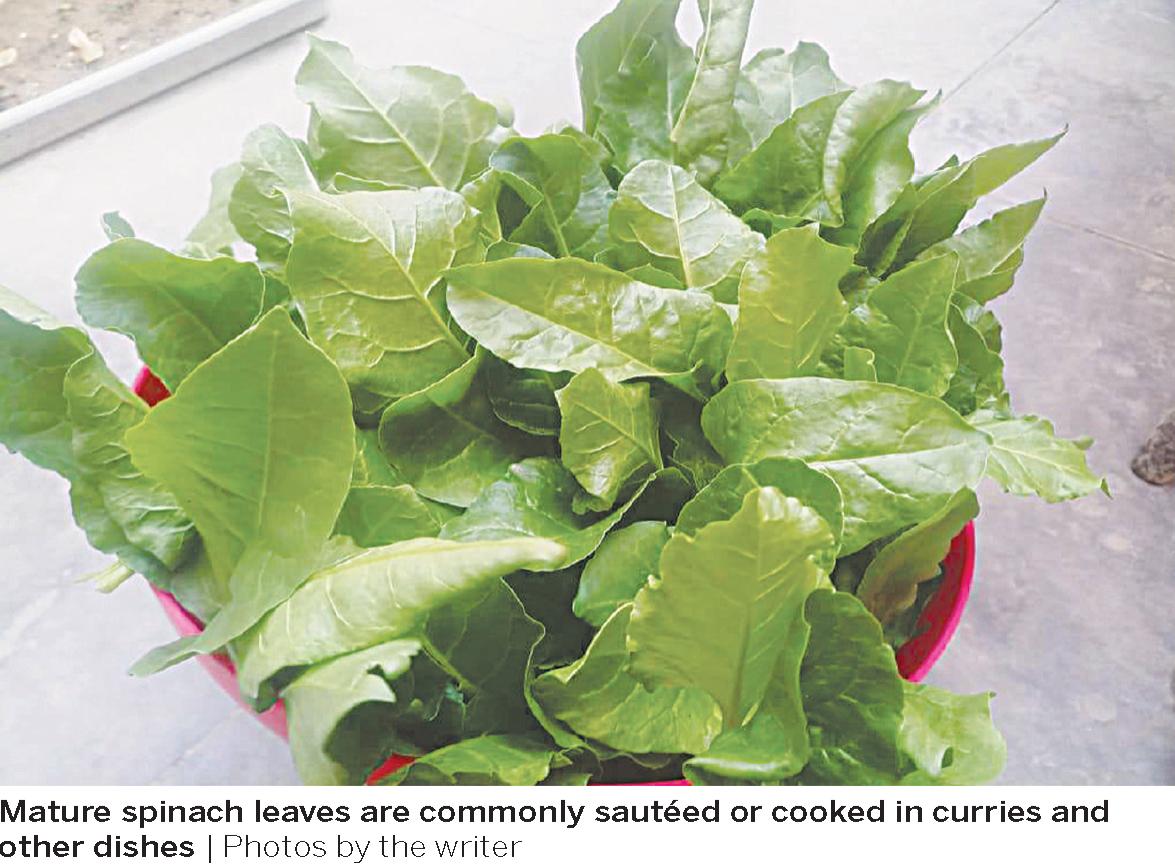
As the plant matures, its leaves grow larger and develop a more pronounced, earthy flavour. Depending on the variety, they may become thicker and develop a more elongated or pointed shape. Leaves measuring around four to six inches are generally suitable for harvesting, although their size varies with growing conditions.
Mature spinach leaves are commonly sautéed or cooked in curries and other dishes. Although they can also be eaten raw, their firmer texture makes them more suitable for cooking than the tender baby leaves. Their stalks remain edible but become somewhat firmer and crunchier as the plant matures.
Unlike many other leafy vegetables, spinach does not initially develop a prominent above-ground stem. Instead, its leaves emerge individually from a central growing point, or crown, close to the soil surface. Each leaf has its own short stalk, known botanically as a petiole.
The best time to harvest spinach is early in the morning, when temperatures are relatively cool. Alternatively, it can be harvested in the evening. Picking leaves during the hot afternoon sun can accelerate moisture loss, causing the harvested foliage to wilt.
Spinach is best harvested while its leaves are still tender. As the plant matures, the leaves may become thicker and develop a stronger, sometimes bitter flavour. The plant will eventually bolt — sending up a flowering stalk — particularly when exposed to warmer temperatures and longer daylight hours. Once bolting begins, leaf quality and flavour deteriorate rapidly.
One way to harvest spinach is to cut the entire rosette close to the soil surface. Alternatively, the plant can be uprooted, although this generally ends its productive life. Cutting rather than pulling is preferable, as it keeps the harvested leaves cleaner and leaves the roots undisturbed.
A more productive approach, particularly for kitchen gardeners, is to harvest only the outer leaves while leaving the younger central leaves and growing point intact. This cut-and-come-again method allows the plant to continue producing fresh foliage for subsequent harvests. With favourable growing conditions, new leaves will emerge over the following weeks, allowing gardeners to harvest from the same plant more than once.
From aaloo palak [spinach with potatoes] and palak paneer [spinach with cheese] to spinach cooked with meat or lentils, the vegetable is deeply rooted in our culinary culture. One of my favourite Ramazan activities, indeed, is picking fresh spinach leaves from the garden to prepare pakorras [fritters] for iftar. ■
Please send your queries and emails to doctree101@hotmail.com. The writer is a physician and a host for the YouTube channel ‘DocTree Gardening’ promoting organic kitchen gardening