
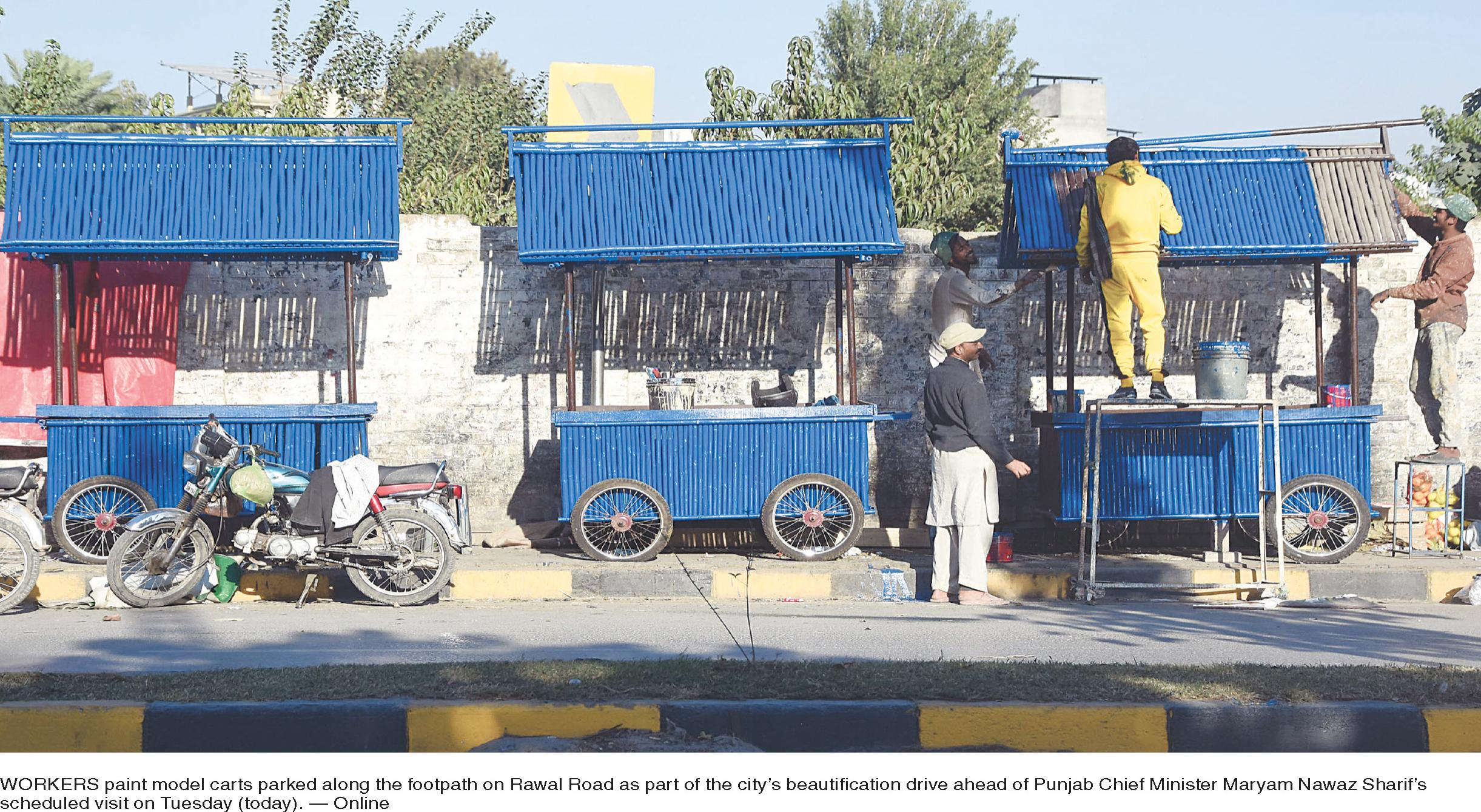
RAWALPINDI: Punjab Chief Minister Maryam Nawaz will visit Rawalpindi to inaugurate 35 more electric buses and review ongoing development projects in the garrison city on Tuesday (today).
The chief minister will also distribute laptops among students at Pir Mehr Ali Shah Arid Agriculture University.
A senior official of the district administration told Dawn that the provincial government had provided 35 more electric buses for 10 routes in the city, while 45 buses were already being operated on different roads.
He said that now 80 buses would operate on different routes across the city with buses arriving at each stop every 20 minutes. The service would operate continuously from 6am to 10pm. The official said women and senior citizens would be allowed to travel free of charge while other passengers would pay a nominal fare of Rs20.
He said the chief minister would visit different roads and areas and check development works launched by the Punjab government to uplift the city and improve the condition of roads and bazaars.
‘Maryam Nawaz will visit Pir Mehr Ali Shah Arid Agriculture University and inspect the pedestrian streets at Commercial Market Satellite Town and Raja Bazaar and other roads,’ the official said.
Arrangements have been finalised for the visit. ‘As the chief minister has directed the administration and police not to close any road and educational institution during her visit, the district administration has asked all educational institutions and traders to keep their outlets open as per routine,’ said the official.
On the other hand, Pakistan Muslim League-Nawaz (PML-N) has made arrangements to give the chief minister a warm welcome.
PML-N Divisional President and MNA Malik Ibrar Ahmed told Dawn that the party finalised the arrangements to welcome its leader and chief minister in the city.
He said local leaders and workers will gather in different parts of the garrison city and welcome her.
Moreover, workers would establish welcome camps in different parts of the city from Commercial Market to Raja Bazaar. The women’s wing and party workers have been invited to meet the chief minister and, in this regard, they will gather at the university, Commercial Market and Raja Bazaar.
PML-N Metropolitan President Sardar Naseem Khan added that it was not a public meeting but workers wanted to welcome the chief minister for her services including upgradation of hospitals, cleanliness, construction of roads, water supply and the provision of electric buses.
Security arrangements
More than 4,000 police personnel will be deployed to ensure foolproof security and manage traffic during the chief minister’s visit to Rawalpindi.
Continuous monitoring of the chief minister’s route will be carried out from Safe City surveillance cameras, while the Bomb Disposal Squad will conduct search and sweeping of the route.
Under the security plan, sharp shooters will be deployed on rooftops of the high-rise buildings along the route.
Regional Police Officer (RPO) Babar Sarfraz Alpa and City Police Officer (CPO) Dr Sardar Ghiyas Gul on Monday visited different areas and reviewed the security arrangements.
Senior officers briefed the RPO and CPO about the security and traffic arrangements.
The CPO said coordinated and foolproof arrangements will be ensured throughout the district to maintain law and order and prevent crimes.
The protection of the lives and property of citizens and the establishment of law and order is the first responsibility. As part of the security measures, the traffic police have made a traffic plan to facilitate the public during the visit of the chief minister as additional personnel will be deployed.
However, residents may face severe traffic congestion with the erection of police barriers on Murree Road and temporary suspension of traffic during the CM’s visit to the Arid Agriculture University, Nawaz Sharif Park and Commercial Market.
The chief minister has already instructed authorities not to close markets, shops or businesses during her official visits.
Moreover, residential streets should not be sealed or blocked, and public movement must not be restricted under a security pretext.
The instructions were issued to the regional and district police officers, commissioners and deputy commissioners.