
Across the comic strips and cartoon episodes of Popeye the Sailor, the diminutive Popeye would routinely get the better of the muscular Bluto, usually while vying for the affections of the lanky Olive Oyl. With his corncob pipe clenched between his teeth, Popeye would reach for his trusty can of spinach, which, once consumed, gave him superhuman strength and speed.
While spinach may not confer superhuman powers, it is among the most nutritious leafy greens, offering an impressive range of vitamins and minerals. Although its promotion through the Popeye series was unintentional, spinach has since benefitted from organised campaigns highlighting its nutritional value and encouraging its consumption and cultivation. But even Popeye had difficulty convincing his children to eat it.
Spinach has long been regarded as a food that helps build strength, particularly for people who appear pale or complain of fatigue. This association is partly rooted in its iron and folate content, nutrients that play an important role in producing healthy blood cells. Some health professionals might even recommend spinach to those exhibiting paleness of the inner lining of the lower eyelid (palpebral conjunctiva), which can sometimes point to anaemia, but a blood test is needed to establish the diagnosis.
Moreover, the iron in spinach is less readily absorbed than that from animal sources, and the vegetable should not be considered a treatment for anaemia.
Traditionally, elders have also encouraged its inclusion in the diet, particularly during pregnancy, when adequate iron and folate intake is important for maternal health. It also provides vitamins A, C and K, as well as minerals such as calcium, magnesium and potassium.
In Pakistan, spinach is typically sown between October and November, although sowing periods can vary by region and temperature. Under favourable conditions, the seeds begin to germinate within a few days.
Spinach is generally best grown from seeds sown directly in its permanent location. However, seedlings raised in individual cells or small containers can be transplanted carefully once they have developed a few true leaves.
If starting seeds in individual cells or small containers, keep the potting mix moist and loosely cover the containers with a transparent plastic sheet to retain moisture during germination. Place them in a sheltered spot and remove the cover as soon as the seedlings emerge.
The first leaves to emerge after germination are known as seed leaves, or cotyledons. In spinach, these are narrow and elongated, unlike the broader true leaves that develop later.
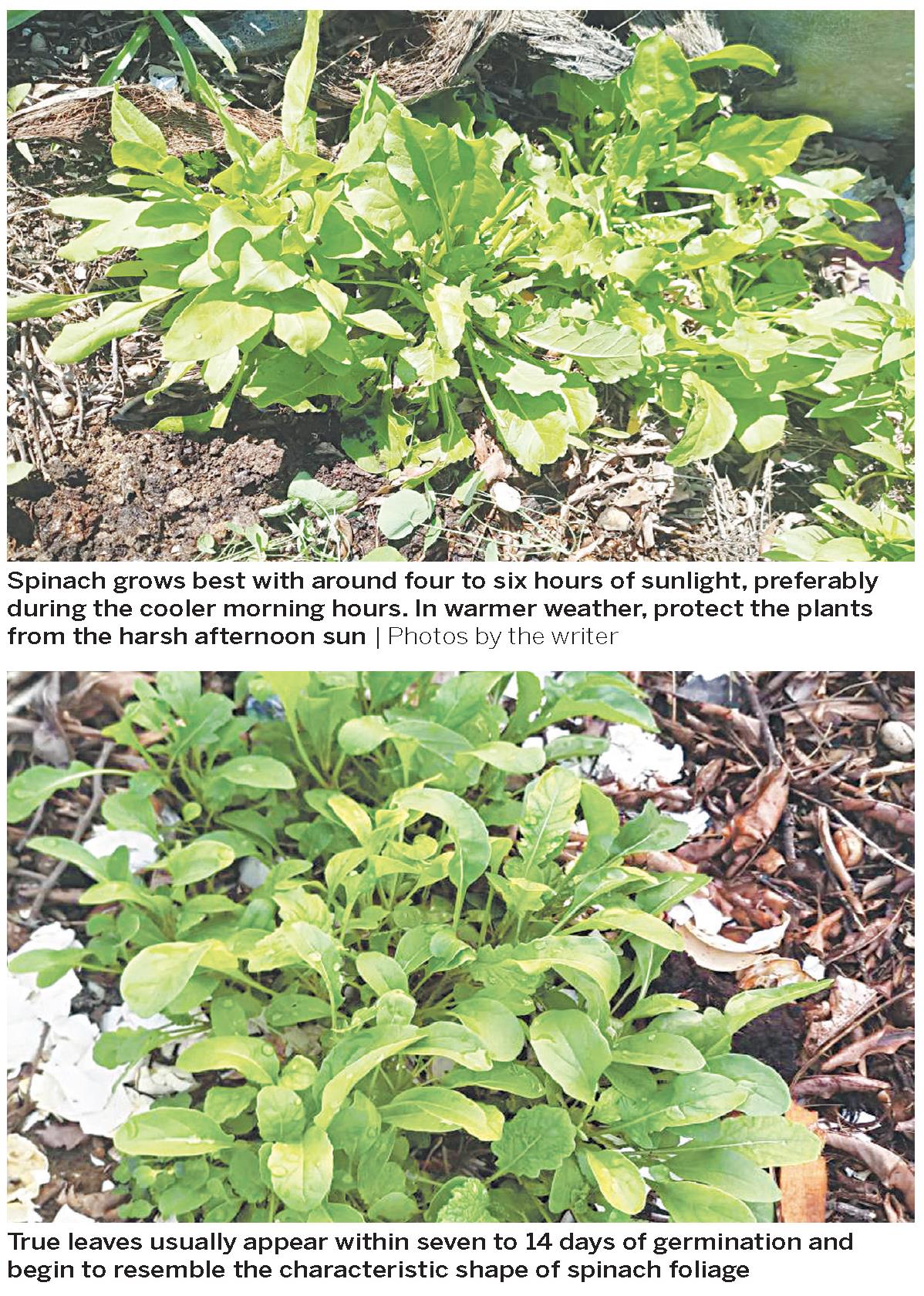
The first true leaves usually appear within seven to 14 days of germination and begin to resemble the characteristic shape of spinach foliage.
Once the seedlings have developed a few true leaves and begin to crowd one another, they can be thinned to give each plant sufficient room to grow. Those removed with their roots intact can be transplanted elsewhere, while the tender leaves can also be used in salads.
For seedlings raised in cells, thinning is followed by transplantation. Under favourable conditions, this will be around three to four weeks after germination. Transplanting requires care, as young spinach seedlings are delicate and their roots can be easily damaged during handling.
Prepare the seedlings’ permanent growing location before moving them from their cups or seedling trays.
Moisten the potting mix before planting and ensure it is free of stones and other debris. Incorporate some well-rotted compost to improve its nutrient content and structure. If using a commercial fertiliser, follow the recommended application rate.
Make a small hole in the prepared potting mix, large enough to accommodate the seedling’s roots.
Use a small garden trowel or spoon to lift the seedling carefully, retaining as much soil around its roots as possible.
Place it in the hole, keeping the stem upright and at approximately the same depth as it was growing previously.
Gently firm the soil around its base to support the plant without compressing it too tightly. Water the soil around the seedling and ensure that excess water can drain freely.
Space the seedling s five to six inches apart, to allow sufficient room for leaf development. Spinach grows best with around four to six hours of sunlight, preferably during the cooler morning hours. In warmer weather, protect the plants from the harsh afternoon sun. Protect young seedlings from birds and other pests by installing a lightweight garden net. Ensure that it allows adequate sunlight and air circulation.
Please send your queries and emails to doctree101@hotmail.com. The writer is a physician and a host for the YouTube channel ‘DocTree Gardening’ promoting organic kitchen gardening